
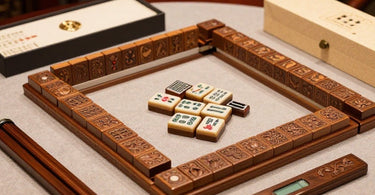
A mahjong set can cost considerably more than a standard board game, and the price difference between two sets can be surprisingly large. The reason is not simply that mahjong is a traditional game or that attractive packaging makes it a luxury purchase. You are often paying for a large collection of precisely made tiles, detailed artwork, durable materials, coordinated accessories, and a case designed to protect and present the set.

The short answer: A mahjong set is expensive when its tile quality, manufacturing process, design work, accessories, and storage are more substantial than those of a basic game set.
However, a high price does not automatically mean better gameplay. For most regular players, tile readability, comfortable handling, a complete configuration, and reliable storage matter more than elaborate decoration.
A mahjong set costs more because it contains many individual tiles that must be consistently shaped, weighted, finished, and marked. Premium sets may also use higher-grade acrylic or other materials, detailed engraving, custom artwork, coordinated racks and accessories, and presentation-quality storage cases. Design, packaging, shipping, and retail costs add to the final price.
Our recommendation: Pay for durable tiles, clear markings, a complete set, and a case that suits how you will use it. Spend extra on distinctive colors, premium finishes, and gift-ready presentation only when those features genuinely matter to you.
1. The Real Reasons Mahjong Sets Cost So Much
Mahjong is not a game with a handful of interchangeable pieces. A standard American mahjong set has 152 playing tiles, including numbered suit tiles, winds, dragons, flowers, and jokers. Some retail sets include additional blank or replacement tiles, so the advertised total may be higher. That is a significant number of individual pieces to manufacture, mark, inspect, and package.
Every tile needs to be recognizable during play. Its dimensions should be consistent enough to handle comfortably, its markings should be legible, and its surface should withstand repeated shuffling. A set that looks beautiful in a product photograph but feels awkward or has unclear symbols can become frustrating after a few games.
From our experience evaluating mahjong sets as products for both play and gifting, the final price usually reflects several cost categories working together:
- Materials: The plastic, acrylic, resin, bamboo, or other materials used for the tiles and accessories.
- Production: Molding, cutting, engraving, coloring, polishing, and quality inspection.
- Design: Original tile artwork, color combinations, typography, and coordinated visual details.
- Accessories: Racks, pushers, dice, scoring pieces, wind indicators, and other components.
- Storage and presentation: Protective cases, fitted interiors, carrying solutions, and gift packaging.
- Business costs: Product development, packaging, freight, warehousing, customer service, and retail operations.
The important point is that these costs do not contribute equally to the playing experience. Better tile construction can improve everyday use. A more elaborate display case may improve presentation but do little to change how a hand plays. Buyers should understand that difference before paying a premium.
2. How Mahjong Tile Materials Affect the Price
Tile material is one of the first things to investigate when comparing mahjong sets. Two sets can have similar artwork and tile counts but feel very different because of their material, density, finish, and construction.
Acrylic: A premium look and a distinctive finish
Acrylic is popular in contemporary decorative mahjong sets because it can produce vivid colors, glossy surfaces, and visually striking layered effects. It is especially attractive when the tile design is part of the product's appeal rather than merely a way to identify suits and numbers.
However, acrylic is not automatically the best choice for every player. A premium appearance does not guarantee better engraving, more comfortable handling, or greater resistance to damage. Check the actual tile construction and surface finish rather than assuming that the word acrylic justifies a higher price.
Melamine and other molded plastics: Practical everyday choices
Many traditional-style and everyday sets use molded plastic materials, including melamine-based constructions. These can offer a practical balance of durability, consistent shapes, and accessible pricing. For beginners, family game nights, and frequent casual play, a well-made plastic set can be a sensible purchase.
Do not dismiss a set because it is not acrylic. If the tiles are consistent, easy to read, comfortable to handle, and properly finished, a less expensive material may deliver everything you actually need.
Resin and specialty materials: Paying for appearance and production choices
Resin and specialty constructions can support unusual colors, decorative effects, and smaller design-led collections. Their cost depends on the specific formulation, production method, finishing work, and batch size. A custom-looking tile may require more development and handling than a standard mass-produced design.
Bone and bamboo: Why vintage sets can command high prices
Older mahjong sets sometimes feature bone-faced tiles with bamboo backs. These materials are part of the historical appeal of vintage sets. The British Museum documents an early mahjong set in its collection made from bone, wood, and bamboo, illustrating how the physical construction of traditional sets differs from many modern products.
Vintage pricing is a separate market from modern retail pricing. Age, condition, completeness, provenance, carving quality, and collector demand can all affect value. A vintage set should be assessed as a collectible object, not simply compared with a new set designed for regular game nights.
3. Manufacturing, Engraving, and Design Add to the Cost
Tile production is more involved than printing a picture on a flat surface. A mahjong tile needs a consistent body, a clean face, recognizable markings, and a finish that holds up to repeated contact. A full set contains many pieces, so small inconsistencies can become obvious when all the tiles are placed together.
Engraved markings versus surface printing
One of the most useful details to check is how the symbols are applied. Engraved or recessed markings can be filled with color and integrated into the tile face. Depending on the manufacturing process, this can create a more substantial finish than a basic surface print.
Printed designs are not automatically poor quality. Modern printing methods can produce attractive and durable results. The real question is whether the design is protected and whether the markings remain clear after repeated shuffling, handling, and cleaning.
Consistent size and finishing
Tiles that vary noticeably in height, width, or edge finish can feel uneven in the hand and look inconsistent on the table. Quality control matters because a set is used as a coordinated group. A manufacturer must keep the pieces visually and physically consistent, not simply produce one attractive sample tile.
Original artwork and color development
Distinctive artwork can also raise the price. A custom color palette, carefully coordinated suits, decorative backs, and special editions require design work and production decisions. These details can make a set recognizable and gift-worthy, but they are not necessarily functional upgrades.
For commercial users such as clubs, instructors, and event organizers, consistency and replacement availability are usually more important than limited-edition artwork. For collectors and gift buyers, a distinctive design may be a central reason to purchase.
4. What Is Included in a Complete Mahjong Set?
A major reason mahjong sets have different prices is that listings do not always include the same components. One product may be a tile-only set, while another includes racks, pushers, dice, a wind indicator, scoring accessories, and a protective case.
American mahjong is particularly important to check carefully. The standard American playing configuration uses 152 tiles: 108 numbered suit tiles, 16 wind tiles, 12 dragon tiles, 8 flowers, and 8 jokers. Some sets add spare tiles, which explains why product descriptions may advertise totals above 152.
The American Mah Jongg Association explains the role of the National Mah Jongg League card and the structure of American play. The current annual card matters because the winning hands change from year to year. The National Mah Jongg League is the organization that publishes the official American card and sells it separately.
| Component | What it does | Why it affects value |
|---|---|---|
| Playing tiles | The core pieces used to build and complete hands | Material, tile count, finish, artwork, and quality control are major cost factors |
| Racks | Hold each player's tiles in an organized row | Material, stability, finish, and construction affect usability |
| Pushers | Help players build and move the wall | Can add convenience and may be integrated into racks |
| Dice | Used in determining the deal and wall break | Usually a small part of the overall cost |
| Wind indicator | Shows the prevailing or dealer wind, depending on the group's setup | Useful for organized play and a coordinated accessory package |
| Scoring accessories | Help players track or manage scoring | Can make a set more convenient as a ready-to-use package |
| Storage case | Protects and organizes tiles and accessories | Case materials, fitted interiors, hardware, and presentation can add considerable cost |
| Annual American card | Lists the current legal winning hands for American play | Usually purchased separately and updated annually |
Before buying, read the included-items list rather than relying on the phrase complete set. If you are new to the game, our Mahjong Guide for Beginners explains the basics of American play. If you are comparing formats, see our guide to different types of mahjong games.
5. Mahjong Set Price Comparison: What Are You Paying For?
There is no single correct price for every mahjong set. A basic set intended for occasional play should not be judged by the same criteria as a design-led gift set with a fitted case. The useful comparison is not simply the price tag; it is the combination of construction, included components, and intended use.
| Set category | Typical characteristics | Best for | Our buying judgment |
|---|---|---|---|
| Entry-level set | Simple molded tiles, basic markings, limited accessories or a basic bag | Beginners and occasional family games | Good value when tile quality and game compatibility are confirmed |
| Mid-range everyday set | More considered tile finish, clearer designs, coordinated accessories, practical storage | Regular home players and social groups | Often the most sensible balance of cost and usability |
| Premium design set | Distinctive colors, upgraded materials or finishes, coordinated presentation | Frequent players who value aesthetics and gifting | Worth considering when the design and construction both meet expectations |
| Luxury or collector set | Special materials, limited designs, elaborate cases, collectible or vintage appeal | Collectors and high-end gift buyers | Buy for the specific craftsmanship or collectible value, not because a high price guarantees better play |
Why two sets with similar tile counts can cost very different amounts
Tile count is only one part of the product. One set may use straightforward molded tiles and a simple fabric bag. Another may include a more complex tile finish, original artwork, a structured case, and coordinated accessories. Even if both contain the same number of playing tiles, their production and packaging costs can be very different.
There is also a difference between a product that is designed to be used and one designed to be presented. A gift-ready set may have a carefully fitted interior, decorative exterior, and a more polished unboxing experience. Those features can be valuable, but buyers should recognize that they are paying for presentation as well as gameplay.
6. Is an Expensive Mahjong Set Actually Worth It?
Sometimes yes, but not for everyone. A premium mahjong set is worth buying when its better construction, more comfortable handling, distinctive design, or storage solution will be used regularly. It is not worth paying extra simply because a product is described as luxury or premium.
Who should consider spending more?
- Frequent players: If you play several times a week, consistent tiles, clear markings, and a durable case can make a meaningful difference over time.
- Hosts and entertainers: A coordinated set can make game nights feel more considered and provide a polished table presentation.
- Gift buyers: A distinctive case and attractive design can make a mahjong set feel like a complete, memorable gift.
- Collectors: Special designs, unusual materials, and vintage construction may justify a premium when authenticity and condition are established.
Who does not need an expensive set?
- First-time players: Beginners should prioritize the correct tile configuration, readable markings, and basic accessories before paying for decorative upgrades.
- Occasional players: If the set comes out only a few times a year, an attractive but practical mid-range option may be sufficient.
- Clubs and teaching groups: Organizations that need several sets should focus on durability, easy identification, replacement options, and cost per complete setup.
- Traveling players: A lighter, compact storage solution may be more useful than a heavy display case.
Pros and cons of buying a premium mahjong set
| Pros | Cons |
|---|---|
| Distinctive artwork and more polished presentation | Decorative upgrades can increase the price without improving gameplay |
| Potentially better tile finish and more consistent construction | Premium labels do not guarantee better manufacturing quality |
| Coordinated accessories and organized storage may be included | Some accessories may be unnecessary for players who already own them |
| Can make a thoughtful gift for a regular player | Personal style is subjective, so an expensive design may not suit the recipient |
| Suitable for display between game nights | More elaborate cases can be heavier and less convenient to transport |
Our position is straightforward: a premium set should earn its price through tangible details. If you cannot identify what is better about the tiles, accessories, or case, you may be paying mostly for branding and appearance.
7. A Closer Look: A Gift-Ready American Mahjong Set
For buyers who want a set that combines practical game-night use with a more decorative presentation, the Story-suns Heritage Burgundy American Mahjong Set with Black Tiles and Display Case is one example of how design and storage contribute to the overall value.

Heritage Burgundy American Mahjong Set with Black Tiles and Display Case
$159.90
This set pairs distinctive black tiles with colorful engraved tile markings and a structured burgundy vegan leather display case. Its design is intended for both regular entertaining and presentation as a home gift.
- Black tiles with colorful engraved dots, bams, craks, flowers, dragons, winds, and jokers.
- Corner indices designed to make tile identification easier.
- Structured burgundy vegan leather case with tonal stitching and a gold-foil emblem.
- Separate lift-off lid and fitted cream interior for organized storage.
- Scoring chips, dice, and a wind indicator stored with the set.
What makes this type of set worth considering?
The strongest selling point is the combination of a distinctive playing surface and a case that looks appropriate in a living space. The black tiles create a bold visual identity, while the colorful markings help distinguish the different tile groups. The fitted interior also gives the accessories a designated place instead of leaving everything loose in a bag.
That makes it a relevant option for people who host mahjong evenings, want a coordinated home game set, or are buying a gift for someone who already enjoys the game. It is not necessarily the right purchase for someone who wants the lowest-cost way to learn mahjong. A beginner with a limited budget should first confirm the tile configuration and essential accessories.
Before ordering any American set, confirm the exact tile count and included accessories in the current product listing. The annual NMJL card is a separate consideration; do not assume it is included unless the listing explicitly says so.
8. What to Check Before Buying an Expensive Mahjong Set
A good buying decision starts with the way you intend to play. In most professional buying situations, we recommend checking compatibility and construction before considering the decorative details.
1. Confirm which version of mahjong you play
American, Chinese, Japanese riichi, and other regional forms do not all use the same tile configuration or rules. An American set commonly includes jokers, while many Chinese sets do not. A set that looks attractive but does not match your group's game can become an expensive mistake.
If you are unsure which version to buy, read our overview of eight different types of mahjong games before placing an order.
2. Check the complete tile count
For American mahjong, check that the set includes the 152 standard playing tiles, including eight jokers. Some products add blanks or spare tiles, so a larger advertised number is not necessarily a different playing configuration. Ask the seller to clarify what is included if the listing is vague.
3. Inspect the tile markings
Look for clear symbols, strong contrast, and consistent markings across the full set. If possible, inspect close-up photographs rather than relying on lifestyle images. Players should be able to identify suits, numbers, winds, dragons, flowers, and jokers quickly while the game is moving.
4. Ask how the tiles are made
Look for specific information about the material and marking process. Does the seller identify the tile material? Are the designs engraved, filled, printed, or layered? Are the tile dimensions provided? A detailed product description is more useful than a vague claim of premium quality.
5. Compare the accessories included
Check whether racks and pushers are included, whether dice and a wind indicator are supplied, and whether scoring accessories are part of the package. If you already own racks, paying for another set may not be worthwhile. If you are starting from scratch, a coordinated package can reduce the need to buy separate components.
6. Evaluate the storage case realistically
A case should protect the tiles, keep accessories organized, and suit the way you store or transport the set. A fitted display case is attractive for home use, while a lightweight carrying bag may be more practical for weekly games at different locations.
7. Check replacement and customer support options
Tiles can become lost or damaged. Before buying a premium set, check whether replacement tiles are available and whether the seller can help identify a matching piece. This is especially important for players who expect to use the same set for years.
8. Compare the total cost, not only the listed price
Include shipping, taxes, optional racks, mats, replacement pieces, and the annual card where applicable. A lower-priced tile-only set may cost more after you purchase all the missing essentials. Conversely, an expensive bundle may include accessories you will never use.
For more buying context, explore our guide to six places to buy mahjong tiles and our overview of the best mahjong sets in 2026.
9. Common Mistakes That Make Buyers Overpay
Mistake 1: Assuming a higher price means better gameplay
A beautiful set can be enjoyable to own, but decorative finishes do not make a player more skilled. If you mainly want to learn the game, invest first in a compatible set with readable tiles and the accessories you need.
Mistake 2: Confusing tile count with completeness
A product advertised with 160 or more tiles may include spare or blank pieces. That does not automatically mean it includes racks, pushers, a case, or every accessory you need. Check the component list individually.
Mistake 3: Buying the wrong regional set
This is one of the most avoidable errors. A Chinese set and an American set are not automatically interchangeable. Confirm the rules and tile requirements used by your regular group before choosing a product.
Mistake 4: Choosing appearance over readability
Unusual colors and decorative symbols may look impressive online, but the markings must remain easy to recognize during play. If the tile faces are difficult to read, the novelty can wear off quickly.
Mistake 5: Paying for accessories twice
Some experienced players already own racks, pushers, mats, or scoring accessories. If that describes you, compare tile-only options with complete bundles. Paying for duplicate accessories rarely improves value.
Mistake 6: Ignoring the storage and transport situation
A large, structured case can be attractive on a shelf but inconvenient to carry to a weekly game. Match the case to your routine rather than treating the most elaborate storage option as automatically superior.
Mistake 7: Forgetting the annual American mahjong card
American players use the current NMJL card to identify valid winning hands. The card is updated annually, so it should be treated as a separate recurring game expense rather than assumed to be a permanent part of the tile set. Our mahjong strategy guide can help once you have the right equipment and understand the rules.
10. How to Decide How Much to Spend
The right budget depends on how often you play, whether you need a complete setup, and how much you value presentation. Rather than choosing a price first, define the job the set needs to do.
| Your situation | What to prioritize | Where to save | Our recommendation |
|---|---|---|---|
| Learning mahjong | Correct game format, readable tiles, essential accessories | Special finishes and luxury packaging | Start with a reliable, practical set |
| Weekly home games | Comfortable handling, durable markings, organized storage | Collector features you will rarely use | Choose a well-made everyday or mid-range set |
| Hosting and entertaining | Visual design, coordinated accessories, attractive case | Unnecessary duplicate accessories | Spend more if presentation is part of the experience |
| Gift purchase | Distinctive design, gift-ready storage, clear product details | Features the recipient does not need | Choose a complete-looking set that suits the recipient's style |
| Club or teaching use | Consistent construction, easy identification, replacement support | Limited-edition decoration | Prioritize reliability and total cost across multiple sets |
| Collecting | Authenticity, condition, provenance, unusual craftsmanship | Unverified claims of rarity | Evaluate the object as a collectible, not just a game set |
For commercial users such as mahjong instructors, clubs, and event organizers, buying several consistent sets may be more valuable than purchasing one elaborate premium set. For a household that hosts friends regularly, however, one attractive and well-organized set may be a better long-term purchase.
There is no reason to upgrade simply because a more expensive model exists. Upgrade when your current set has a real limitation: unclear markings, damaged tiles, missing components, poor storage, or a format that does not suit your group.
11. Expert Recommendation: Pay for the Parts You Will Actually Use
So, why is a mahjong set so expensive? Because the product is more than a box of game pieces. A complete set involves a substantial number of individually manufactured tiles, visual design, finishing, accessories, storage, and distribution. Premium materials and presentation can add further cost, particularly when a set is designed to function as both a game product and a gift.
But the most expensive set is not automatically the best choice. For beginners, we recommend spending on the correct tile configuration and clear markings. For regular players, prioritize comfortable handling, consistent construction, and a case that protects the tiles. For gift buyers, distinctive artwork and a polished display case can justify paying more, provided the actual playing components are also well made.
Story-suns approaches mahjong as both a game-night experience and a product people may want to display or give. That is why design and storage matter in the right context. The best purchase is the one that matches your playing habits, your budget, and the person who will use it.
Frequently Asked Questions About Mahjong Set Prices
1. Why are some mahjong sets so expensive?
Expensive mahjong sets may use higher-grade materials, more involved tile finishing, original artwork, coordinated accessories, and premium storage cases. The large number of individual tiles also adds to manufacturing and quality-control costs. Some sets are priced for collectors or gift buyers rather than basic gameplay.
2. What is a reasonable price for a mahjong set?
There is no universal reasonable price because sets differ in tile materials, regional format, accessories, and storage. Compare the complete contents and construction rather than judging by price alone. A practical everyday set may offer better value than a decorative premium set if you mainly want to play.
3. Are expensive acrylic mahjong tiles better?
Acrylic tiles can offer vivid colors, glossy finishes, and distinctive layered designs. However, acrylic is not automatically better for gameplay. Tile consistency, readable markings, surface quality, and comfortable handling matter more than the material name by itself.
4. How many tiles should an American mahjong set have?
A standard American mahjong game uses 152 playing tiles: 108 numbered suit tiles, 16 winds, 12 dragons, 8 flowers, and 8 jokers. Some retail sets include extra blank or replacement tiles, so the advertised total may be higher. Check the breakdown rather than relying only on the headline number.
5. Does a mahjong set usually include racks and pushers?
Not always. Some products are tile-only sets, while others include four racks and pushers. Check the product's included-items list before purchasing. If you already own racks, a tile-only option may be more economical.
6. Is a vintage bone and bamboo mahjong set worth more?
It can be, particularly when it has genuine historical materials, fine workmanship, good condition, and collector interest. However, age alone does not establish value. Check authenticity, completeness, condition, and provenance before paying a collector's premium.
7. Is a mahjong set a good gift?
Yes, especially for someone who already plays or wants to host game nights. A set with distinctive tiles and a well-organized display case can feel more personal than a basic game box. Before buying, confirm which version of mahjong the recipient plays.
8. Does an American mahjong set include the annual NMJL card?
Do not assume it does. The National Mah Jongg League publishes a new card each year, and it is generally purchased separately. Check the product listing and obtain the current card if your group plays by NMJL rules.
9. Should beginners buy a premium mahjong set?
Usually, beginners should prioritize a compatible set with readable tiles and the necessary accessories. A premium design is optional. Once you know how often you play and what features you value, you can decide whether a more expensive set is a worthwhile upgrade.
References
The following sources provide historical and game-structure context for evaluating mahjong sets and American mahjong equipment.
- The British Museum – China's Hidden Century: Mahjong Set. Museum collection information documenting an early mahjong set and its bone, wood, and bamboo construction.
- National Mah Jongg League. The official organization publishing the annual American Mah Jongg card and rules resources.
- American Mah Jongg Association – Glossary. A reference for American mahjong terminology and the standard tile groups.
