
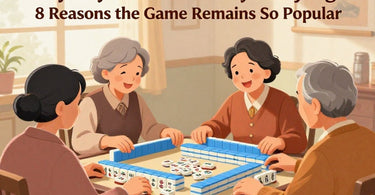
Walk through a neighborhood community center, visit a family gathering in China, or spend an afternoon in a retirement community, and you may notice something familiar: a group of older women sitting around a table, arranging mahjong tiles, discussing their next moves, and laughing over a competitive game. It is a scene that appears across generations and cultures, but it raises an interesting question: why do old ladies play mahjong so often?
The answer goes far beyond having something to do in retirement. Mahjong offers older women a combination of social connection, mental stimulation, friendly competition, cultural identity, and a meaningful weekly routine. It is one of the rare traditional games that can bring people together for hours without requiring expensive equipment or demanding physical activity.

From our perspective at Story-Suns, mahjong's lasting appeal comes from the experience surrounding the game as much as the game itself. The tiles create a reason to gather, while the conversation, shared memories, strategy, and traditions make people want to return.
Quick Answer: Why Do Older Women Love Playing Mahjong?
Older women often play mahjong because it provides social interaction, mental engagement, friendly competition, cultural connection, and a regular activity to look forward to. It helps maintain friendships, creates opportunities for family bonding, and offers an enjoyable way to spend time with others.
The biggest reason: Mahjong combines a social gathering with an engaging game. Players are not simply sitting together; they are thinking, communicating, making decisions, and sharing an experience. That combination makes mahjong especially attractive to many older adults.
Quick Summary: 8 Reasons Older Women Play Mahjong
| Reason | What Mahjong Offers | Why It Matters |
|---|---|---|
| Social connection | Regular gatherings with friends | Creates opportunities for meaningful interaction. |
| Mental stimulation | Memory, pattern recognition, and strategy | Keeps players mentally engaged. |
| Friendly competition | Challenges and opportunities to improve | Makes each session interesting. |
| Cultural tradition | Family customs and shared heritage | Connects generations through a familiar activity. |
| Stress relief | Enjoyable concentration and conversation | Provides a break from everyday concerns. |
| Daily routine | Scheduled game sessions | Creates structure and something to anticipate. |
| Accessibility | A seated game with adaptable rules | Can accommodate different ages and experience levels. |
| Personal enjoyment | Beautiful tiles, collecting, and mastering skills | Turns a traditional game into a lasting hobby. |
2. Mahjong Keeps the Mind Active Through Strategy and Memory
Mahjong is entertaining, but it is not a passive activity. Players must remember tiles, recognize patterns, consider possible combinations, observe discarded tiles, and decide what to do next.
That mental engagement is a major reason the game remains attractive to older players.
Memory and Pattern Recognition
During a game, players need to recognize suits, numbers, winds, dragons, flowers, and other special tiles depending on the mahjong variation. They must also remember which tiles have already appeared and which combinations they are trying to complete.
For example, a player collecting a particular sequence must decide whether to keep a tile that might become useful later or discard it to pursue a stronger combination.
These decisions encourage active attention and pattern recognition rather than passive observation.
Planning and Decision-Making
Mahjong also involves evaluating risks. A player might have several possible ways to complete a hand, but choosing one direction means giving up other opportunities.
Experienced players learn to adjust their strategy based on the tiles available, their opponents' discards, and the current state of the game.
For older beginners, this makes mahjong particularly interesting because there is always something new to learn. Even after years of playing, different hands and table situations create fresh challenges.
Does Mahjong Prevent Dementia?
It is important to separate mental engagement from medical claims. Playing mahjong involves cognitive activities, but it should not be presented as a guaranteed way to prevent dementia or reverse age-related cognitive decline.
Research has examined associations between mahjong participation and cognitive outcomes among older adults, but findings do not mean that every player will experience the same benefits. Mahjong is best viewed as one enjoyable component of a broader lifestyle that includes social interaction, physical activity, adequate sleep, and other mentally engaging pursuits.
3. Friendly Competition Makes Mahjong Exciting
Older women do not necessarily play mahjong simply to pass the time. Many enjoy the competitive side of the game just as much as younger players do.
There is satisfaction in building a strong hand, recognizing an opportunity, making a clever discard, and winning a round after carefully planning several moves.
Winning Is Fun, but Improvement Is More Important
In a regular mahjong group, players gradually become familiar with each other's habits and playing styles. Someone may prefer cautious hands, while another player enjoys taking calculated risks.
Friendly competition gives everyone a reason to improve. Players discuss mistakes, share strategies, and sometimes replay memorable hands long after the game has ended.
For beginners, learning the rules and completing a first winning hand can be particularly rewarding.
Why Strategy Keeps Experienced Players Interested
Mahjong combines chance and skill. The tiles drawn are not entirely under a player's control, but decisions about discarding, calling, and hand development influence the outcome.
This balance prevents the game from becoming predictable. Even an experienced player cannot assume that every round will follow the same pattern.
For readers interested in improving their gameplay, our mahjong strategy tips explain how to read the table, build stronger hands, and make more informed decisions.
4. Mahjong Preserves Cultural Traditions and Family Memories
For many older Chinese women, mahjong is more than a recreational game. It is connected to family gatherings, neighborhood friendships, celebrations, and cultural traditions.
Mahjong has a long history in Chinese society and has developed into several regional variations. In many families, the game is passed down informally from one generation to another.
Mahjong as a Family Tradition
Imagine a family gathering during Lunar New Year. After dinner, relatives move to a table and bring out a mahjong set. Grandparents teach younger family members how to recognize the tiles, explain the rules, and demonstrate familiar strategies.
For older women, these gatherings can create a strong sense of continuity. The same tiles may have been used during family celebrations for years, making the game part of shared family memories.
Mahjong Connects Different Generations
Young adults may initially join a game because their grandparents or parents enjoy it. Once they learn the rules, they discover that mahjong is more engaging than they expected.
The game creates a natural opportunity for conversation between generations. Younger players learn traditional rules and family stories, while older players get to share something they know well.
This cultural connection is particularly meaningful when families live far apart and only meet during holidays or special occasions.
Traditional Chinese Mahjong and American Mahjong
It is also important to recognize that mahjong is not one identical game everywhere. Chinese regional versions and American mahjong have different rules, tile requirements, and playing conventions.
American mahjong, for example, uses a National Mah Jongg League card to guide the hands that can be played during a particular year. Traditional Chinese versions generally follow different hand-building and scoring systems.
Choosing the correct set is therefore important when purchasing mahjong tiles for a family that already plays a particular variation.
Explore our guide to eight different types of mahjong games to understand the differences before buying a set.
5. Mahjong Provides a Relaxing Break From Everyday Stress
Mahjong requires concentration, but that does not mean it feels like work. For many players, focusing on the tiles provides a welcome break from daily responsibilities.
When a game begins, attention shifts toward the hand, the available tiles, and the decisions around the table. Everyday concerns temporarily become less prominent.
A Healthy Balance Between Focus and Conversation
Unlike activities that require continuous physical exertion, mahjong is generally played while seated. Players can concentrate on the game while enjoying conversation and refreshments.
This makes it attractive to older adults who want an engaging social hobby without organizing a physically demanding activity.
However, long sessions should still include breaks. Standing up, stretching, drinking water, and changing positions can make extended gatherings more comfortable.
Why the Social Atmosphere Matters
The environment can influence the experience just as much as the game itself. A comfortable table, good lighting, readable tiles, and friendly players help make the gathering enjoyable.
Some groups prefer a competitive atmosphere, while others care more about conversation and companionship. Neither approach is wrong. The best mahjong group is one where players feel comfortable participating.
6. Mahjong Gives Older Women a Meaningful Routine After Retirement
Retirement creates freedom, but it can also remove the daily structure that work once provided. Without regular appointments or professional responsibilities, some older adults find it difficult to establish a consistent social routine.
A mahjong group can fill part of that gap.
A Weekly Gathering to Look Forward To
Consider a retired woman who meets three friends every Friday afternoon. She knows when the gathering starts, who will attend, and what she needs to bring.
This small commitment creates anticipation and encourages her to remain connected with her social circle.
It can also motivate people to leave home, stay involved in their communities, and maintain friendships beyond their immediate families.
Mahjong Can Become a Long-Term Hobby
Unlike many short-lived hobbies, mahjong offers room for continued development. Players can learn different versions, improve their strategy, participate in local clubs, and teach new players.
There is no requirement to become an expert. Some people enjoy casual games for decades without ever participating in formal competitions.
For many older women, that combination of familiarity and continuous learning is exactly what makes mahjong worth keeping in their weekly routine.
7. Mahjong Is an Accessible Hobby for Many Older Adults
Another reason older women enjoy mahjong is its practical accessibility. A typical game can be played indoors, around a table, with a relatively small group of people.
It does not require a large playing field, expensive sporting equipment, or extensive physical preparation.
Easy to Organize at Home or in a Community Center
Mahjong can be played in living rooms, senior community centers, social clubs, and dedicated game rooms. Once players have the correct tiles and understand the rules, they can organize a game without complicated arrangements.
Some groups prefer traditional tile racks and scoring accessories, while others use more modern tables and storage solutions.
Can Beginners Learn Mahjong Later in Life?
Absolutely. There is no age requirement for learning mahjong. Older beginners can start with a simplified explanation of the tiles and basic rules before moving on to more advanced strategies.
The key is to choose a version that matches the group. Learning American mahjong while attending a group that plays a Chinese regional version can create unnecessary confusion.
Our mahjong guide for beginners is a useful starting point for readers who want to understand the essential rules of American mahjong.
Small Practical Adjustments Make a Difference
For older players, comfort should be part of the setup:
- Use tiles with clear, high-contrast markings.
- Choose a comfortable table height.
- Provide adequate lighting to make symbols easier to recognize.
- Allow enough space between players and tile racks.
- Keep frequently used accessories within easy reach.
- Take breaks during longer sessions.
These small decisions can make the game more comfortable without changing its traditional character.
8. Beautiful Mahjong Tiles Make the Game More Enjoyable
Mahjong is a traditional game, but the physical tiles also have considerable aesthetic appeal. Their colors, engraved symbols, weight, and texture contribute to the overall playing experience.
For some older women, owning a beautiful mahjong set is part of the pleasure. A well-made set can become a treasured household item, a conversation piece, or a gift passed between family members.
Why Tile Quality Matters
Players handle tiles repeatedly during a session. Poorly finished surfaces, unclear symbols, inconsistent sizing, or uncomfortable handling can make a game less enjoyable.
When choosing a set, pay attention to:
- Readability: Tile symbols should be easy to distinguish at normal playing distance.
- Material: Consider the feel, durability, and finish of the tiles.
- Engraving: Clear, consistent markings make identification easier.
- Accessories: Racks, dice, scoring chips, and other components should match the version being played.
- Storage: A fitted case protects the tiles and keeps accessories organized.
A beautiful set is worth buying when it will be used regularly or given as a meaningful gift. However, expensive decorative features should never replace clear symbols, comfortable handling, and compatibility with the intended mahjong variation.
Which Mahjong Version Do Older Women Prefer?
There is no single version preferred by all older women. Playing habits depend heavily on cultural background, location, family tradition, and the rules used by an established social group.
For example, older Chinese players may be familiar with Sichuan, Cantonese, or other regional forms of Chinese mahjong. In the United States, many established women's mahjong groups play American mahjong.
Comparison of Popular Mahjong Versions
| Mahjong Version | Common Playing Context | Key Characteristics | Best For |
|---|---|---|---|
| Chinese Classical Mahjong | Traditional and historical mahjong settings | Traditional tile-based hand building and scoring | Players interested in traditional gameplay |
| Cantonese Mahjong | Southern Chinese communities and family gatherings | Regional rules and familiar traditional patterns | Players accustomed to Cantonese rules |
| Sichuan Mahjong | Sichuan communities and regional game groups | Distinctive regional rules and hand-building decisions | Players who enjoy this faster regional style |
| American Mahjong | U.S. clubs, social groups, and organized gatherings | Uses a yearly NMJL card and specific tile requirements | American mahjong groups and beginners learning this version |
| Japanese Riichi Mahjong | Japanese game clubs and competitive settings | Riichi declarations, scoring rules, and additional strategy | Players interested in a structured competitive format |
Before purchasing a set, ask the players which version they use. This is more important than choosing a design based on appearance alone.
For shoppers interested in traditional Chinese designs, our guide to traditional Chinese mahjong sets explains what to consider when selecting a suitable set.
Benefits and Limitations of Playing Mahjong in Older Age
Mahjong offers many practical benefits, but it is important to have realistic expectations. It is a recreational activity that can support an active social lifestyle, not a substitute for medical care or a complete health program.
Pros of Playing Mahjong
- Encourages regular social interaction.
- Provides opportunities to maintain friendships.
- Engages memory, attention, and strategic thinking.
- Offers enjoyable, low-impact recreation.
- Helps establish a regular weekly routine.
- Preserves family and cultural traditions.
- Creates opportunities for intergenerational bonding.
- Can be enjoyed casually or competitively.
Potential Limitations
- Long sessions can cause physical discomfort.
- Some rule systems are difficult for beginners.
- Tile markings may be challenging for players with poor eyesight.
- Competitive groups can occasionally create social tension.
- Regular participation may require transportation.
- Sets and accessories can become expensive.
- It does not replace physical exercise or medical treatment.
- Players need to learn the correct rules for their group.
Who Should Consider Playing Mahjong?
Mahjong is especially suitable for older adults who enjoy social activities, puzzles, traditional games, and friendly competition. It can also be a good hobby for people who want to build new friendships after retirement.
Who Might Not Enjoy It?
People who dislike group activities, prefer solitary hobbies, or find tile-based games frustrating may not enjoy mahjong. Individuals with significant visual or physical difficulties may also need adaptations to make playing comfortable.
There is no need to force participation. The goal is to find a recreational activity that the individual genuinely enjoys.
How to Choose a Mahjong Set for Older Women
If you are buying a mahjong set for your mother, grandmother, wife, or a group of retired friends, the most important decision is to choose something that is practical to use and appropriate for the version they play.
We recommend prioritizing tile readability, comfortable handling, complete accessories, and organized storage before considering decorative features.
1. Choose the Correct Mahjong Version
American mahjong and Chinese mahjong do not always use the same tile configurations. Some American sets include Jokers and specific accessories required by the rules. Chinese sets may have different tile counts and configurations.
Check the intended version before purchasing. Our guide to where to buy mahjong tiles provides additional shopping considerations.
2. Prioritize Clear Tile Markings
Older players may appreciate clear engraving, contrasting colors, and recognizable symbols. These details make it easier to identify tiles during fast-moving games.
For American mahjong, corner indices can be particularly useful because they provide an additional visual reference.
3. Look for Convenient Storage
A well-organized case keeps tiles and accessories together between sessions. This is particularly important for people who regularly transport their sets to friends' homes, community centers, or social clubs.
4. Consider Appearance and Gift Presentation
Mahjong sets are often purchased as birthday gifts, holiday gifts, retirement presents, or housewarming gifts. An attractive display case can make the set feel more personal and memorable.
Our Recommended Gift Option: Heritage Burgundy American Mahjong Set

Heritage Burgundy American Mahjong Set with Black Tiles and Display Case
Price: $159.90
For someone who already enjoys American mahjong, a coordinated set with organized storage and distinctive tiles makes a thoughtful gift.
- Distinctive black tiles with colorful engraved dots, bams, craks, flowers, dragons, winds, and Jokers.
- Corner indices for additional visual clarity.
- Burgundy vegan leather display case with tonal stitching and gold-foil emblem.
- Two-piece storage design with a fitted cream interior.
- Coordinating scoring chips, dice, and wind indicator.
- Designed for playing, entertaining, gifting, and display.
The set is particularly suitable for someone who enjoys hosting mahjong afternoons and wants a polished case that looks attractive between games.
Explore the Heritage Burgundy Mahjong SetIs an Expensive Mahjong Set Worth Buying?
It depends on how frequently the recipient plays and what matters to them. For occasional beginners, a straightforward and complete set is usually sufficient. For regular players who host gatherings, a higher-quality set with convenient storage and distinctive tile designs can be worth the additional investment.
We would not recommend paying extra purely for appearance if the tiles are difficult to read or the set is incompatible with the player's preferred rules.
For additional product inspiration, see our selection guide to the best mahjong sets in 2026.
Common Misconceptions About Older Women Who Play Mahjong
Mahjong has a strong association with older women in many communities, but some assumptions about the hobby are misleading.
Myth 1: Older Women Play Mahjong Only Because They Are Retired
Retirement can create more free time, but it is not the only reason. Many women have enjoyed mahjong for decades, long before retirement. The social, strategic, and cultural aspects are attractive at different ages.
Myth 2: Mahjong Is Just a Way to Pass Time
Mahjong is a structured game involving strategy, memory, pattern recognition, and decision-making. Players who enjoy competition often spend considerable time improving their skills.
Myth 3: All Mahjong Games Follow the Same Rules
Different regional versions have different tile configurations, scoring systems, and rules. A set designed for American mahjong may not be suitable for every traditional Chinese variation.
Myth 4: Mahjong Is Only Popular in Chinese Communities
Although mahjong originated in China, it has become popular in many countries. American mahjong clubs, Japanese riichi groups, and international social communities demonstrate how the game has adapted to different cultures.
Myth 5: You Need to Be Naturally Good at Strategy to Enjoy Mahjong
Beginners can enjoy mahjong without understanding every advanced strategy. Learning the basic rules and playing regularly is enough to begin participating. Skill develops gradually through experience.
How Long Does a Mahjong Gathering Usually Last?
One reason mahjong works well as a social activity is that a gathering can be adjusted to the group's schedule. Some players meet for a single game, while others spend an entire afternoon playing several rounds.
The length depends on the version, players' experience, and whether the group takes breaks between games.
For people planning their first gathering, our guide explains how long a full game of mahjong takes and what to expect from a typical session.
A practical recommendation for older beginners is to start with shorter sessions. This allows everyone to learn the rules comfortably without becoming tired or overwhelmed.
Frequently Asked Questions About Why Old Ladies Play Mahjong
1. Why do old ladies love playing mahjong?
Many older women enjoy mahjong because it combines social interaction, mental stimulation, friendly competition, and cultural traditions. It provides a regular opportunity to meet friends, stay mentally engaged, and enjoy a shared hobby.
2. Is mahjong good for older adults?
Mahjong can be a beneficial recreational activity for older adults because it encourages social interaction and engages attention, memory, and strategic thinking. However, it should be considered one part of an active lifestyle rather than a guaranteed way to prevent cognitive decline.
3. Why is mahjong especially popular among older Chinese women?
Mahjong has a long cultural history in China and is often associated with family gatherings, neighborhood friendships, and traditional celebrations. Many older Chinese women learned the game from relatives or friends and continue playing because it connects them with familiar customs and social communities.
4. Does playing mahjong help prevent dementia?
Mahjong involves cognitive activities such as memory, attention, and pattern recognition. Some research has examined its association with cognitive health, but playing mahjong has not been established as a guaranteed method of preventing dementia. It is best enjoyed as part of a broader healthy lifestyle.
5. Can an 80-year-old woman learn to play mahjong?
Yes. Age is not a barrier to learning mahjong. Beginners can start with basic tile recognition and simple rules, then gradually develop their skills. Larger, clearly marked tiles and adequate lighting can make the experience more comfortable.
6. How many people are needed to play mahjong?
Traditional mahjong is generally designed for four players. Some regional variations and casual formats allow different player counts, but four players is the standard arrangement for most traditional games.
7. Is American mahjong different from Chinese mahjong?
Yes. American mahjong uses a National Mah Jongg League card and includes features such as Jokers and specific hand requirements. Chinese mahjong has several regional variations with different rules and scoring methods. Players should choose a set compatible with their preferred version.
8. What is a good mahjong gift for an older woman?
A complete mahjong set with readable tiles, convenient accessories, and organized storage is a thoughtful gift for someone who already enjoys playing. For American mahjong players, a decorative set with black tiles and a burgundy display case can be an attractive option for birthdays, holidays, and special occasions.
9. How often do older women play mahjong?
It varies by individual and social group. Some players meet weekly, others play several times a week, and some participate mainly during holidays and family gatherings. Regular mahjong groups often establish a consistent schedule.
10. Is mahjong better than playing cards for older adults?
Neither is universally better. Mahjong offers tile recognition, hand-building, and strategic decisions, while card games provide their own memory and planning challenges. The better activity is the one the individual enjoys and is motivated to play regularly.
References and Further Reading
Understanding mahjong's cultural and social significance requires looking beyond the game itself. The following authoritative resources provide useful historical and research context.
- Encyclopaedia Britannica – Mahjong. Historical background, traditional gameplay, and the development of mahjong.
- PubMed – Research on Mahjong and Cognitive Health in Older Adults. Research literature examining mahjong participation and cognitive outcomes.
- National Mah Jongg League. Official information about American mahjong, annual playing cards, rules, and organized play.
Mahjong Is More Than a Game for Older Women
So, why do old ladies play mahjong? Because it gives them something that many people value at every stage of life: friendship, enjoyment, challenge, tradition, and a reason to spend time together.
For some, mahjong is a competitive hobby. For others, it is a weekly social gathering or a family tradition passed down through generations. The tiles may be the reason everyone sits at the table, but the relationships built around that table are what keep the game alive.
If someone in your family already enjoys mahjong, a thoughtfully chosen set can make those gatherings even more special. Look for comfortable, clearly marked tiles, complete accessories, and a storage case that suits the way they play.
At Story-Suns, we believe a good mahjong set should be more than a collection of tiles. It should be something people enjoy bringing out, sharing with friends, and remembering for years.
Discover the Story-Suns Heritage Burgundy American Mahjong Set

1. Mahjong Creates Social Connections and Lasting Friendships
Social interaction is arguably the biggest reason many older women enjoy mahjong. After retirement, everyday opportunities to meet colleagues and acquaintances may become less frequent. Children may move away, work schedules change within families, and established social circles can become smaller.
Mahjong provides a simple solution: a reason to meet regularly.
Four players can sit around a table, prepare their tiles, and spend an afternoon playing. Between turns, they talk about family, food, travel, neighborhood news, and everyday experiences. The game provides a natural structure for conversation without requiring anyone to organize a complicated event.
Why a Regular Mahjong Group Matters
Consider a group of four retired friends who agree to meet every Wednesday afternoon. At first, they may gather mainly to play. After several months, however, the weekly session becomes an important part of their social lives.
They remember each other's birthdays, discuss family events, exchange recipes, and celebrate personal milestones. Even when someone has a difficult week, the group offers a familiar environment where they can reconnect.
This is what makes mahjong different from simply watching television or playing a solitary puzzle. It creates a shared experience.
Mahjong Can Help Reduce Social Isolation
Regular social activities are important for older adults. Mahjong provides an opportunity to interact face-to-face, communicate, and maintain friendships. Although playing mahjong should not be treated as a guaranteed treatment for loneliness, a consistent game group can be a valuable part of an active social lifestyle.