
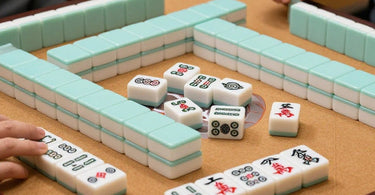
A traditional mahjong set is worth buying when its tile design, language, tile count, and accessories match the way you intend to play. The biggest mistake is choosing a set simply because it looks Chinese or has beautifully engraved tiles. Chinese mahjong is played under different regional rules, and a set designed for one style may not include everything required for another. Before buying, identify the version you want to play, then compare tile markings, material, size, storage, and replacement options.

Quick Answer: Which Traditional Mahjong Set Should You Choose?
For a traditional Chinese-style game, start with a set whose tile faces and tile count match your preferred rules. A Chinese-style set typically uses suited tiles, honors, and flowers or seasons, but the exact contents vary by regional game. If you want a gift-ready set for casual American Mahjong nights, choose an American set instead; its Jokers, racks, and card-based gameplay make it different from many traditional Chinese sets.
- Best for learning: A clearly marked set with readable characters, bamboo, circles, and honor tiles.
- Best for regular play: Durable tiles, consistent dimensions, comfortable handling, and a complete inventory.
- Best for gifting: A well-finished case, neatly organized accessories, and a design that suits the recipient's home.
- Best for collectors: Distinctive engraving, attractive materials, and a documented origin or design story where available.
- Best buying rule: Verify the tile inventory and regional rules before judging appearance or price.
1. What Is a Traditional Mahjong Set?
A traditional mahjong set is a collection of tiles and accessories used to play mahjong, a tile-based game with a long history in China. Players draw and discard tiles to build a winning hand according to the rules of the version being played. Although the game's basic structure is recognizable across many variants, regional rules, scoring systems, and tile requirements are not identical.
Most Chinese-style sets include three numbered suits—often called characters or cracks, circles or dots, and bamboo—along with honor tiles such as winds and dragons. Some sets also include flower and season tiles. Depending on the rules, a set may contain around 136 or 144 playable tiles, while other regional variations use different inventories. Do not assume every set advertised as “Chinese mahjong” has the same contents.
The distinction matters because a visually attractive set can still be the wrong purchase. If your family plays a particular regional Chinese variant, check the exact tile inventory and rule requirements. If your group plays American Mahjong, a traditional Chinese set may not include the Jokers or racks you expect. For social play, the right set is the one that fits the group's rules—not necessarily the most ornate one.
Buying principle: Confirm the rules first, then choose the material and design. Tile appearance cannot compensate for missing tiles, unreadable markings, or a mismatch with the game you actually play.
2. Top 6 Traditional Chinese Mahjong Set Types to Consider
The six options below are practical set categories rather than a claim that one exact product is universally the best. The right choice depends on regional rules, budget, portability, and whether you value regular play or display. Product descriptions can use the word “traditional” loosely, so verify specifications before ordering.
1. Classic Chinese Mahjong Set with Standard Tile Markings
Best for: Beginners, families, and players learning a familiar Chinese-style ruleset.
A classic set with clear characters, bamboo, circles, winds, dragons, and the appropriate flower or season tiles is the safest starting point for most new buyers. The emphasis should be on legibility and completeness rather than elaborate decoration. Beginners benefit from tile faces that are easy to distinguish at a glance, particularly when learning combinations and recognizing honors.
Before buying, request a full tile inventory and images of the actual tile faces. Check that the set includes the pieces required by your chosen rules, plus any dice or other accessories needed for play. A well-organized storage case is useful, but it should be secondary to the tiles themselves.
Our recommendation: Choose a clearly marked, complete set with straightforward storage if you expect to play regularly. Avoid paying a large premium for decorative packaging before you know which features matter to your group.
2. Traditional Chinese Mahjong Set with Engraved Tiles
Best for: Frequent players who appreciate tactile details and a more traditional visual style.
Engraved or carved markings can create a distinctive look and may offer a satisfying tactile finish. However, “engraved” alone is not a quality guarantee. The depth, contrast, consistency, and clarity of the markings matter more than the marketing description. If the color fills are uneven or the symbols are difficult to distinguish under indoor lighting, the decoration may reduce usability rather than improve it.
Ask about tile dimensions, material, weight, and the finish used on the faces. If you play for long sessions, consider whether the tiles are comfortable to pick up, shuffle, and stack. For commercial users such as game cafés or hospitality venues, repeat handling and easy cleaning may matter more than intricate decoration.
Worth buying? Yes, if the engraving is clear and the construction is consistent. No, if the higher price mainly reflects ornamental claims without useful product specifications.
3. Compact Mahjong Set for Travel and Small Spaces
Best for: Travelers, apartment dwellers, and occasional players.
A compact set is convenient when storage space is limited or you want to bring the game to a friend's home. The trade-off is that smaller tiles can be less comfortable to handle, especially for players who prefer larger markings or have difficulty distinguishing small symbols. A reduced set may also omit tiles or accessories required for your preferred variant.
Check the external case dimensions, individual tile size, total weight, and whether the set includes the full inventory. Product photography can make a small set look substantial, so use measurements rather than visual scale alone. For travel, a secure case with internal compartments is more valuable than a decorative box that allows tiles to move around.
Our recommendation: Buy compact only when portability is a real priority. If the set will stay at home and be used weekly, standard-size tiles are usually the more comfortable long-term choice.
4. Premium Mahjong Set with a Display Case
Best for: Gift buyers, design-conscious hosts, and players who want the set to look polished between games.
A premium case adds value when it protects the tiles, keeps accessories organized, and looks appropriate in a living room or game room. Materials, stitching, hinges or lid fit, internal compartments, and ease of carrying all influence whether the case feels genuinely useful. A luxury finish is not automatically a sign of superior tile quality, so assess the playing pieces and storage separately.
For a housewarming or holiday gift, presentation can reasonably be part of the budget. For a set used several times a week, prioritize secure storage and durable construction. A case that looks impressive but is awkward to open or poorly organized will become irritating with repeated use.
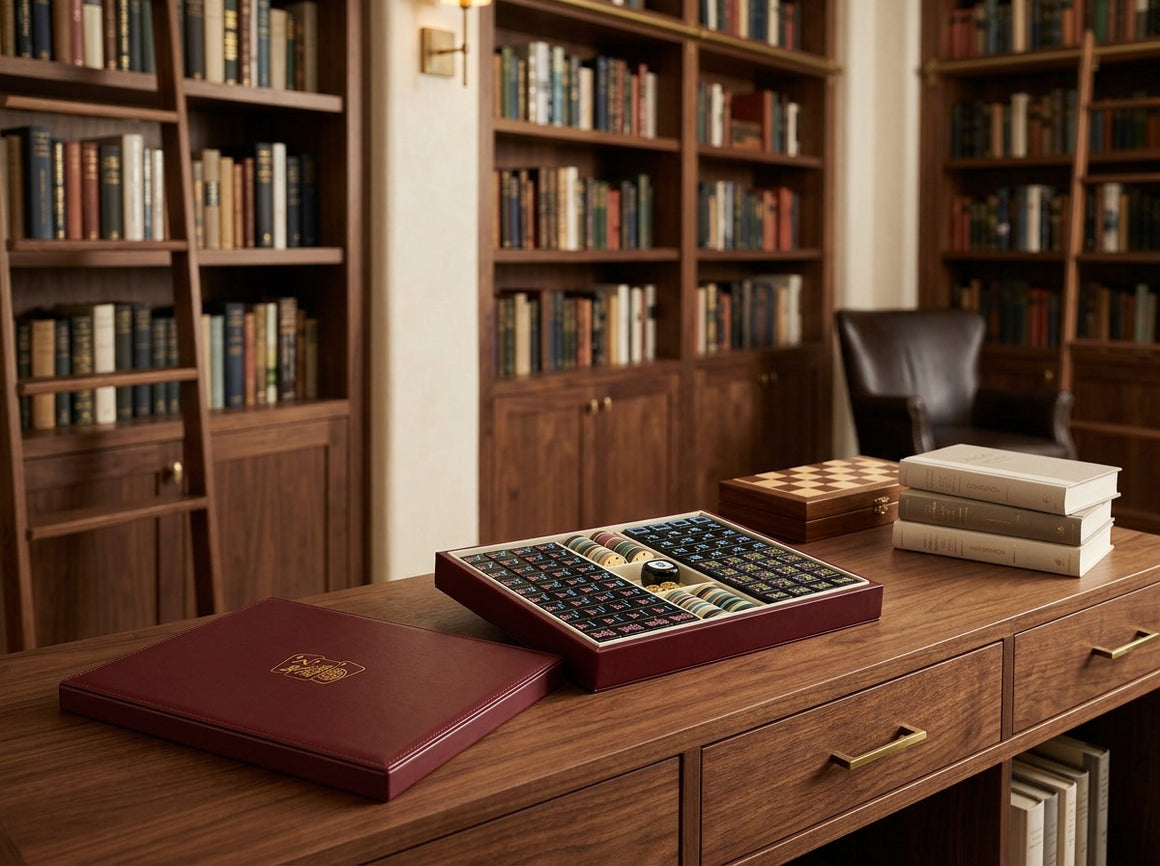
Story&Suns offers a Heritage Burgundy American Mahjong Set with Black Tiles and Display Case. It is designed for American Mahjong, with black tiles, engraved colored markings, Jokers, a burgundy vegan-leather case, scoring chips, dice, and a wind indicator. It is a stylish option for American Mahjong gatherings, but it should not be mistaken for a standard traditional Chinese set.
5. Vintage-Inspired or Collector-Style Mahjong Set
Best for: Collectors, design enthusiasts, and buyers who value the visual character of a game set.
Vintage-inspired sets can suit a home where games are displayed alongside books, art, and decorative objects. Their appeal may come from the tile palette, typography, case design, or the sense of tradition they evoke. However, a vintage look is not proof of age, provenance, or historical authenticity. If a seller describes a set as antique or historically significant, ask for evidence supporting that claim.
Collectors should examine completeness, condition, restoration, and the availability of replacement pieces. For everyday use, damaged or mismatched tiles can be frustrating. For display, condition and presentation may matter more than whether the set is optimized for frequent gameplay. Decide which purpose takes priority before paying a collector's premium.
Worth buying? A collector-style set is worthwhile when the design genuinely appeals to you and the listing describes its condition accurately. It is less suitable when your primary goal is learning a particular ruleset at the lowest practical cost.
6. Regional Chinese Mahjong Set Matched to Your Rules
Best for: Experienced players and families who consistently play a specific regional variant.
For regular players, matching the tile inventory to the actual rules is more important than choosing a generic set described as “traditional Chinese.” Regional variants can differ in the tiles used, how flowers are handled, hand structure, scoring, and other rules. A set that works for one group may require modifications or additional pieces for another.
Before ordering, identify the exact rules or regional style used by your group. Ask the seller for a tile-count breakdown and confirm whether any optional pieces are included. If the listing does not clearly identify the tile inventory, request written confirmation before paying.
Our recommendation: Experienced players should buy for their ruleset, not for the broad category name. This small amount of research can prevent the inconvenience of discovering that the set is incompatible after it arrives.
3. How a Mahjong Set Works
Mahjong is generally played by four players who draw and discard tiles to form a hand according to a particular ruleset. The goal is usually to complete a legal winning hand, but the exact hand structure, scoring, bonus tiles, and winning conditions vary. The set provides the physical pieces needed to represent suits, honors, and any additional tile categories used by the version being played.
The three main numbered suits are typically circles, bamboo, and characters. Honor tiles represent winds and dragons. Flower or season tiles may serve as bonus tiles in some versions. Players use these pieces to form combinations, such as sequences or triplets, as allowed by the applicable rules.
Tile design affects how quickly players can identify pieces. Clear contrast and consistent symbols are especially useful for beginners, while experienced players may prioritize tactile feel, tile weight, and familiar traditional markings. A well-made set should be readable in ordinary room lighting and should not require players to repeatedly turn tiles to identify them.
Accessories depend on the rules and set format. Dice are common, and some sets include racks, scoring accessories, wind indicators, or other pieces. Do not assume all accessories are necessary for every Chinese variant. Confirm what your group actually uses and avoid paying for components that will remain unused.
4. Comparison Table: Which Mahjong Set Fits Your Needs?
| Set Type | Best For | Main Advantage | Main Limitation | Buying Priority |
|---|---|---|---|---|
| Classic Chinese set | Beginners and family play | Familiar tile categories and straightforward learning | May not match every regional variant | Legibility, completeness, and correct tile count |
| Engraved-tile set | Regular players | Distinctive markings and tactile detail | Quality varies with engraving and finish | Clear symbols and consistent construction |
| Compact travel set | Travel and limited storage | Easy transport and storage | Smaller tiles may be less comfortable | Dimensions, secure case, and full inventory |
| Premium display-case set | Gifting and home entertaining | Polished presentation and organized storage | Higher price may reflect case design more than tile quality | Case construction and actual tile specifications |
| Vintage-inspired set | Collectors and design enthusiasts | Distinctive visual character | Vintage styling does not prove authenticity | Condition, completeness, and provenance claims |
| Regional-rule set | Experienced players | Closer match to a specific style of play | Requires knowing the group's rules first | Exact tile inventory and rules compatibility |
For most first-time buyers, a complete classic set is the sensible starting point. Choose a compact version only if portability matters, and pay for a premium case when presentation is part of the intended experience. Experienced players should start with regional compatibility and work backward to design and price.
5. Benefits and Limitations of a Traditional Mahjong Set
Benefits
- Social value: Mahjong gives family and friends a structured activity that encourages conversation, observation, and strategic decision-making.
- Reusable entertainment: A complete, durable set can support repeated game nights rather than a single-use occasion.
- Skill development: Players practice pattern recognition, memory, probability awareness, and decision-making within the rules of the game.
- Gift potential: A thoughtfully chosen set can be both a playable game and a presentation piece for a host or family member.
- Personal preference: Tile material, engraving, color, and storage can be chosen to match the user's playing habits and home style.
Limitations
- Rule differences: A set described as Chinese may not match every Chinese regional variant.
- Learning curve: New players need to learn tile recognition, legal combinations, turn structure, and scoring.
- Storage needs: A full-size set takes more room than a compact travel version.
- Quality varies: Decorative finishes and attractive packaging do not guarantee consistent tile dimensions or clear markings.
- Accessories may be unnecessary: Some sets bundle components that your preferred version does not use.
The key trade-off is straightforward: buy for the way the set will be used. A premium display case is worth considering for gifting and home presentation; it is less important than tile clarity and completeness for a beginner who simply wants to learn.
6. Pros and Cons of Buying a Traditional Mahjong Set
| Pros | Cons |
|---|---|
| Supports recurring social play and can last for years with appropriate care. | A full set requires storage space and careful organization. |
| Offers choices in tile design, materials, size, and case presentation. | Product listings may use “traditional” without explaining the exact ruleset. |
| Can be a distinctive gift for someone who enjoys tabletop games. | Premium packaging can increase the price without improving gameplay. |
| Clear tile markings can help new players recognize suits and honors. | Small or low-contrast markings can make learning and long sessions harder. |
| A complete inventory makes the set easier to use consistently. | Replacement tiles may be difficult to match if the manufacturer does not offer them. |
7. Who Should Buy One—and Who May Not Need One?
Who should buy a traditional mahjong set?
A traditional mahjong set is a good choice for families with an established Chinese-style game, beginners who want to learn with friends, and regular players who want a dedicated set at home. It can also suit collectors who value the design of the tiles and case, provided they understand the difference between a vintage-inspired product and a verified antique.
For hosts who regularly entertain, the storage case and ease of setup matter. A well-organized case makes it easier to keep the tiles together between gatherings. If the set will be used by different groups, choose clear markings and verify the rules everyone intends to play.
Who may not need a traditional Chinese set?
If your regular group plays American Mahjong, an American set is generally the more practical choice because its tile inventory and accessories are designed around that game. If you only play once or twice a year, borrowing a set before purchasing may be more sensible. And if portability is the overriding concern, a compact set may be more appropriate than a large collector-style case.
For beginners, we recommend learning the rules and tile categories before investing in a luxury set. Upgrade when you can identify a genuine limitation—such as hard-to-read tiles, uncomfortable dimensions, poor storage, or incompatibility with your group's rules—rather than assuming a more expensive set will make the game easier to learn.
8. How to Choose a Traditional Mahjong Set
Check the tile inventory first
Ask for a complete breakdown of the included tiles. Verify the suits, honors, flowers or seasons where relevant, and any special pieces required by your chosen rules. Do not rely on a product title or a single photograph. If the listing says “144 pieces,” clarify whether that number includes accessories or refers only to tiles.
Evaluate tile readability
Look for clear symbols, consistent color fills, and strong enough contrast to identify tiles across a table. Ask for close-up photographs rather than relying only on styled lifestyle images. For older players or beginners, legibility should rank above ornate decoration.
Understand the material claims
Mahjong tiles can be made from different plastics and other materials, and sellers may describe them using broad labels such as resin, acrylic, or composite. Ask what the tile is made from and how the markings are applied. Material alone does not establish quality; finish consistency, resistance to wear, and comfortable handling matter too.
Compare dimensions and weight
Tile size affects handling, visibility, portability, and storage. Larger tiles may be easier to read and pick up but take more room in a case. Smaller tiles are convenient for travel but may feel cramped during longer sessions. If dimensions are not provided, request them before ordering.
Inspect the case and accessories
A useful case protects the tiles during storage and transport. Check the internal layout, closure, compartments, and total packed dimensions. Confirm whether dice, scoring accessories, racks, or a wind indicator are included, and whether those items are appropriate for your ruleset.
Look for a realistic replacement policy
Lost or damaged tiles can make a set difficult to use. Ask whether replacement pieces are available and whether they match the original size, color, and markings. If replacement tiles are unavailable, consider buying from a seller that provides a clear inventory and has a stable product line.
Buy from a listing that answers practical questions
A credible product listing should provide clear photographs, dimensions, materials, included accessories, shipping details, and a usable return policy. If the seller cannot confirm the tile inventory or repeatedly avoids questions about the set's rules compatibility, treat that as a reason to keep looking.
9. Common Mistakes When Buying a Traditional Mahjong Set
Mistake 1: Assuming every Chinese set is interchangeable
Regional rules differ. Confirm the version played by your family or group before buying. This is the single most important step for avoiding an otherwise attractive but unsuitable purchase.
Mistake 2: Choosing appearance over legibility
Beautiful engraving is useful only if the symbols remain easy to recognize. Request close-up images and assess contrast, consistency, and readability before paying extra for a decorative finish.
Mistake 3: Ignoring tile count
A product can contain a large number of pieces and still omit the tiles your rules require. Confirm the actual tile inventory rather than relying on the headline count alone.
Mistake 4: Confusing American Mahjong with traditional Chinese Mahjong
American Mahjong typically uses Jokers and racks and follows a different rules structure. Story&Suns' Heritage Burgundy set is designed for American Mahjong. It can be an excellent choice for that game, but buyers seeking a traditional Chinese ruleset should verify compatibility before purchasing it.
Mistake 5: Overpaying for packaging
A luxury case may be worth the money for a gift or display piece, but it should not distract from tile quality. For regular play, put the budget toward a complete inventory, readable markings, comfortable dimensions, and durable construction.
Mistake 6: Forgetting storage and transport
A set that is difficult to store safely can become inconvenient quickly. Check the case dimensions and how securely the tiles are separated. If you often bring the game to other homes, carrying comfort and secure compartments deserve more attention.
10. Price, Quality, and Long-Term Value
The cheapest set is not always the best value, and the most expensive set is not automatically the best-made. A sensible purchase balances completeness, usability, durability, case quality, and how often the set will be played.
| Buyer Priority | Where to Spend | Where to Save | Upgrade Trigger |
|---|---|---|---|
| Beginner learning the game | Clear markings, correct inventory, easy-to-follow tile design | Collector packaging and premium materials | Tiles are difficult to distinguish or the set does not match the rules. |
| Regular home player | Comfortable dimensions, consistent finish, secure storage | Decorative extras that do not improve play | Wear, poor handling, or missing pieces affect regular sessions. |
| Gift buyer | Presentation, case quality, completeness, recipient's preferred game | Features the recipient will not use | The current set looks worn or is difficult to store and display. |
| Collector | Condition, design details, completeness, documented provenance where claimed | Unsupported “antique” or rarity claims | A specific design or verified historical feature justifies the change. |
| Travel player | Compact dimensions, secure compartments, practical weight | Oversized cases and fragile decorative parts | The current set is too bulky to carry conveniently. |
To assess value, think about cost per expected use rather than price alone. A moderately priced set used every week may deliver more value than a premium set that remains in a cabinet. On the other hand, a gift-ready set can justify a higher budget when presentation is a central part of the purchase.
Before paying a premium, ask whether the added cost buys better tiles, more suitable accessories, stronger storage, or simply a more elaborate appearance. We recommend upgrading only when the feature solves a real problem or materially improves the experience.
11. A Gift-Ready Alternative from Story&Suns
For shoppers whose priority is a polished game-night gift rather than a traditional Chinese ruleset, Story&Suns offers an alternative designed around American Mahjong. The Heritage Burgundy American Mahjong Set with Black Tiles and Display Case is listed at $149.90 and combines distinctive black tiles with a burgundy vegan-leather case and coordinated accessories.

Heritage Burgundy American Mahjong Set
Listed price: $149.90
The black tiles feature colored engraved dots, bams, craks, flowers, dragons, winds, and Jokers, with corner indices for added clarity. A structured burgundy vegan-leather case with tonal stitching and a gold-foil emblem gives the set a coordinated, gift-ready appearance.
- Separate lift-off lid and fitted cream interior
- Storage for tiles and coordinated game accessories
- Scoring chips, dice, and a wind indicator included
- Designed for game nights, display, and gifting
This set makes sense for someone who plays American Mahjong and values presentation as much as playability. The black tiles provide a bold visual contrast, while the burgundy case can sit on a shelf or console between gatherings. It is suitable for holiday, hostess, or housewarming gifting when the recipient's game preference is known.
However, buyers specifically seeking a traditional Chinese set should not select it solely because it contains winds, dragons, and flowers. The inclusion of Jokers and the American Mahjong design are meaningful distinctions. Confirm the recipient's preferred ruleset first; that is a better gift-buying decision than relying on color or packaging alone.
For shoppers assembling a coordinated gift, Story&Suns also offers decorative home pieces such as gold beaded picture frames. For other gift occasions, the brand's guide to gift ideas for female friends offers additional options. These are complementary gifting ideas, not substitutes for choosing the correct Mahjong format.
12. Expert Recommendation: Buy for the Game, Then for the Look
Our recommendation is to make the purchase in three stages. First, identify the exact ruleset. Second, verify the tile inventory, dimensions, markings, and accessories. Third, choose the design and case that fit your budget and intended use.
For beginners, a complete, clearly marked set is usually the best starting point. For regular players, invest in comfortable handling, consistent tile quality, and secure storage. For collectors and gift buyers, presentation can justify a higher price, but only after compatibility and completeness have been confirmed.
Do not buy a set simply because a listing uses the words “traditional,” “Chinese,” “luxury,” or “vintage.” Those labels are not substitutes for specifications. A seller that clearly explains the tile count, game format, materials, and included accessories gives you a better basis for comparison than one relying on attractive photos alone.
Ultimately, a good traditional mahjong set is one that your group can use comfortably and correctly for years. Choose a set that suits the rules you play, is easy to read and store, and offers a level of finish appropriate to your budget. That approach delivers better long-term value than paying for appearance first and discovering the practical limitations later.
13. Frequently Asked Questions
What is included in a traditional Chinese mahjong set?
A typical Chinese-style set includes numbered tiles from the circles, bamboo, and characters suits, along with winds and dragons. Flower and season tiles may also be included. The exact number and inventory depend on the regional rules, so check the product's tile list before ordering.
How many tiles are in a traditional mahjong set?
Many Chinese-style sets contain 136 or 144 playable tiles, depending on whether bonus tiles such as flowers and seasons are included. Other regional variants may differ. Always verify the tile inventory rather than relying only on a headline count.
Is a traditional Chinese mahjong set the same as an American Mahjong set?
No. American Mahjong uses a different rules structure and typically includes Jokers and racks. A traditional Chinese-style set may not contain the pieces needed for American play. Choose the set that matches the rules used by your group.
What should beginners look for in a traditional mahjong set?
Beginners should prioritize readable markings, a complete tile inventory, comfortable tile dimensions, and clear product information. Avoid spending heavily on collector packaging before learning which features you prefer. If possible, confirm the set with an experienced player who uses the same rules.
Are expensive mahjong sets better?
Not necessarily. A higher price may reflect tile material, finishing, a premium case, brand positioning, or gift presentation. Compare tile clarity, completeness, dimensions, storage quality, and replacement availability. Pay more when the added features provide practical value or meet a specific gifting goal.
Are black mahjong tiles traditional Chinese tiles?
Black tiles can be used in different Mahjong products, but tile color alone does not identify the ruleset. Story&Suns' Heritage Burgundy set is specifically an American Mahjong set and includes Jokers. If you need a traditional Chinese format, verify the tile inventory and rules compatibility before buying.
What material is best for mahjong tiles?
There is no universally best material for every buyer. Focus on consistent construction, readable symbols, a comfortable feel, and a finish suited to regular handling. Ask the seller to specify the material rather than relying on broad terms such as “premium resin” without supporting details.
Can a mahjong set be a good housewarming or holiday gift?
Yes, particularly for someone who already plays or wants to learn with a regular group. A complete set with organized storage and attractive presentation can be a memorable gift. Confirm whether the recipient plays Chinese or American Mahjong first, because the wrong format may make the gift less useful.
How should a mahjong set be stored?
Keep the tiles dry, clean, and organized in their case. Avoid leaving them in direct sunlight or exposing them to excessive heat, which can affect some materials and finishes. Store accessories in their designated compartments and check the tile count after gatherings to prevent pieces from being lost.
14. References
- Encyclopaedia Britannica — Mah-jongg. Background on the game's structure and historical context.
- National Mah Jongg League. A primary resource for American Mahjong rules and related materials; useful for understanding why American sets differ from traditional Chinese-style sets.
- Smithsonian Institution. Museum and cultural-history resources that can help readers explore the wider context of games and material culture. Consult specific collection records for claims about an individual historical set.
Product specifications and prices can change. Confirm current availability, included accessories, tile inventory, and the applicable ruleset on the product page before ordering.
