
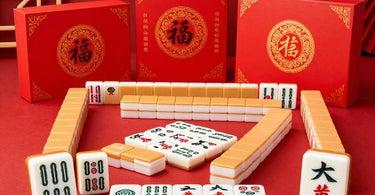
Learning Chinese Mahjong is much easier when you can recognize the tiles quickly. If you are new to the game, a Chinese Mahjong set with numbers can remove one of the most common frustrations: trying to identify unfamiliar Chinese characters and distinguish similar-looking suit patterns during a fast round. The right set should do more than look attractive. It should have the correct tiles for your preferred rules, readable markings, comfortable dimensions and a case that keeps everything organized.
Our recommendation is to prioritize a complete Chinese-style set with Arabic numerals and traditional Chinese symbols on the same tiles. For most beginners, this dual-marking design offers the best balance between learning convenience and traditional gameplay. Larger melamine sets are usually the most practical starting point; premium acrylic or wooden-case sets make more sense when appearance and long-term presentation matter as much as regular play.

For a beginner-friendly option, start by comparing the Mose Cafolo X-Large numbered Chinese Mahjong set. Its large tiles, Arabic numerals, Chinese characters, English instructions and included accessories make it a practical learning choice. If you prefer a traditional wooden case, compare Yellow Mountain Imports' numbered Chinese sets, but check current stock and confirm that the specific version has numbers on the suit tiles—not only the flower tiles. For a lower-cost purchase, numbered melamine sets sold through established marketplaces can be suitable when the seller clearly lists the tile count, markings and accessories.
Quick Summary: Top 5 Chinese Mahjong Sets with Numbers
| Set | Best for | Numbering and material | Our assessment |
|---|---|---|---|
| Mose Cafolo X-Large 146 Numbered | Beginners and easier tile reading | Arabic numerals plus Chinese characters; melamine | Best overall starting point |
| Mose Cafolo Large Blue Back | Players who want large tiles without the largest format | Arabic numerals plus Chinese characters; melamine | Best practical everyday alternative |
| Yellow Mountain Imports The Classic | Traditional presentation and a wooden case | Corner Arabic numerals; acrylic | Best traditional-style design, subject to availability |
| UChinese Numbered Chinese Mahjong Set | Value-focused buyers | Arabic numerals plus Chinese characters; melamine | Good budget-style specification |
| Qunbio 146 Numbered Mahjong Set | Portable family game nights | Arabic numerals plus Chinese characters; melamine | Consider after checking seller and package details |
Prices, inventory and product configurations can change. The recommendations below are based on the published product descriptions and specifications available when this guide was prepared, not on a claim that every set has been physically tested side by side. Check the current listing before ordering, especially if you need a particular tile size or a complete accessory package.
Table of Contents
- What Is a Chinese Mahjong Set with Numbers?
- Top 5 Chinese Mahjong Sets with Numbers
- How Numbered Mahjong Tiles Work
- Comparison: Which Set Is Right for You?
- Pros and Cons of Numbered Tiles
- How Many Tiles Should a Chinese Mahjong Set Have?
- Buying Guide: What to Check Before Ordering
- Common Buying Mistakes
- A Note on Story&Suns and American Mahjong
- Our Expert Recommendation
- Frequently Asked Questions
- References
What Is a Chinese Mahjong Set with Numbers?
A Chinese Mahjong set with numbers is a traditional Mahjong tile set that includes Arabic numerals, such as 1 through 9, alongside the familiar Chinese characters and suit patterns. These small numbers help players identify tile values without having to recognize every Chinese character or count every symbol individually.
Traditional Chinese Mahjong uses three numbered suits:
- Dots or Circles: Usually displayed as circular patterns, with values from 1 to 9.
- Bamboo or Bams: Displayed with bamboo-stick patterns, also numbered from 1 to 9.
- Characters or Craks: Displayed with Chinese number characters and the character for ten thousand.
Each numbered suit normally contains four copies of each value. A standard Chinese set also includes honor tiles—winds and dragons—and commonly includes flowers and seasons. The exact rules and optional tile requirements depend on the regional Mahjong variation you play. The Shanghai municipal government's introduction to Mahjong explains the three suits, honor tiles and the way players combine tiles into groups. Read the Shanghai Mahjong overview.
Why are Arabic numbers useful?
Arabic numerals make it easier for English-speaking beginners to recognize tile values. Instead of learning every Chinese numeral before joining a game, a new player can use the corner number as a quick reference while becoming familiar with the traditional symbols.
That is particularly useful when learning to recognize sequences. For example, a player can more quickly identify a 3-4-5 sequence in the same suit when each tile includes a small printed or engraved number. The traditional tile artwork remains visible, so the numbers act as a learning aid rather than replacing the original design.
From our perspective, dual-marked tiles are a sensible purchase for mixed-experience groups. A family may have one experienced player who recognizes every traditional symbol and three beginners who are still learning. A numbered set helps everyone use the same tiles without making the set look like a teaching prop.
Top 5 Chinese Mahjong Sets with Numbers
1. Mose Cafolo X-Large 146 Numbered Chinese Mahjong Set
Best overall for beginners Large readable tilesThe Mose Cafolo X-Large numbered set is the strongest starting point for shoppers who want a complete Chinese Mahjong game with easy-to-read tile markings. Its published product description specifies large melamine tiles with both Arabic numerals and Chinese characters. The set is designed for Chinese rules and includes a travel case, tile trays, dice, a wind indicator, colored chips and English instructions.
The dual-marking arrangement is the important feature. Beginners can use the Arabic number as a quick guide while gradually learning the dots, bamboo patterns and Chinese characters. Larger tiles are also easier to pick up and read across a table, which can be helpful for family game nights and players who find small markings difficult to see.
What to check: The X-Large listing describes approximately 1.5-inch tiles, 144 playing tiles plus two spares, and a compact carrying case. Confirm the current dimensions and package contents on the seller's listing before purchase. This is a Chinese-style set, not an American Mahjong set; it does not include the jokers and racks required for standard American play.
Our verdict: Choose this set if you are learning Chinese Mahjong, regularly host family games or want a larger tile format. The extra size is more useful than decorative extras when readability is your main concern.
2. Mose Cafolo Large Blue Back Numbered Chinese Mahjong Set
Best everyday alternative Portable storageIf you like the practical features of the X-Large model but prefer a slightly smaller tile, the Mose Cafolo Large Blue Back set is worth comparing. The published product details list 36mm tiles with Arabic numerals and Chinese characters, a travel case, tile trays, 144 standard playing tiles plus two spares, three dice, a wind indicator, colored chips and English instructions.
The 36mm format is a useful middle ground for players who want a substantial tile without moving to the largest available size. It is suitable for regular home play and can be easier to accommodate on a modest-sized table than an oversized set.
What to check: Confirm the exact version and availability. The product page may show different sizes or finishes, and the current ordering status can change. Also confirm that the listing includes all the accessories you expect rather than assuming every color option has identical contents.
Our verdict: This is a sensible option for players who want large, readable numbered tiles but do not need the largest format. Compare it directly with the X-Large version and choose according to table space, hand comfort and storage preference.
3. Yellow Mountain Imports The Classic Chinese Mahjong Set
Best traditional presentation Wooden caseYellow Mountain Imports' The Classic is worth considering if you want a Chinese Mahjong set that looks appropriate on a game-room shelf as well as on the table. Its published specification describes 148 acrylic tiles with Arabic numerals engraved in the corners, a vintage rosewood-veneer case, dice, a wooden wind indicator and scoring sticks.
The corner-number approach is a good design decision. It provides a quick reference without taking over the face of the tile. Players can continue to see the traditional Chinese characters and suit artwork, while beginners have a convenient reminder of the value.
Important availability note: The product page reviewed for this guide showed the set as sold out or unavailable. Treat it as a design benchmark and check the current product status before planning a purchase. Do not pay an inflated resale price simply because a particular finish is temporarily unavailable.
Our verdict: If this model returns to stock at a reasonable price, it is a strong choice for buyers who value the wooden case and traditional appearance. If you need a set immediately, choose an available numbered model instead.
4. UChinese Numbered Chinese Mahjong Set with Travel Case
Best value-oriented option Complete basic packageThe UChinese numbered Chinese Mahjong set is a practical candidate for shoppers who want the core equipment without paying for a premium decorative case. The Walmart listing describes large melamine tiles with Arabic numbers and Chinese characters, together with two spare tiles, dice, a wind indicator, colored chips and a carrying case.
The listed tile composition follows the familiar Chinese arrangement: 36 circles, 36 bamboo tiles, 36 character tiles, 12 dragons, 16 winds and eight flowers or seasons. That gives buyers a useful specification to check against other listings.
What to check: Marketplace listings can change sellers, colors and package configurations. Confirm that the seller is the one you intend to buy from, that the selected color has the same tile markings, and that the listing includes all accessories. Read recent buyer feedback rather than relying only on the headline rating.
Our verdict: This type of set can offer good value for casual home play. It is a reasonable choice if the listing is complete and the seller provides a clear return policy. For frequent play, pay particular attention to tile finish, edge quality and the sturdiness of the storage case.
5. Qunbio 146 Numbered Chinese Mahjong Set
Best for casual family game nights Portable formatThe Qunbio 146-piece numbered set is another option for shoppers who want traditional Chinese tile categories with Arabic numerals. Its Walmart product description lists 1.42-inch melamine tiles with Chinese characters and Western numerals, a carrying case and a standard set of 144 playing tiles plus two blank spares.
This type of package is aimed at convenient home use: a family can keep the set in its case, bring it to a gathering and set up a game without buying a separate storage solution. The dual markings also make it easier for new players to follow tile values.
What to check: The listing has multiple colors and may show different prices or stock status by variation. Confirm the selected version's actual contents, tile dimensions, seller and return terms. A product title that says 146 pieces does not automatically mean every accessory is included.
Our verdict: Consider Qunbio if the selected listing offers the right tile size and complete package at a competitive price. It is a value-focused alternative, but I would still prioritize clear product information and reliable seller support over a small price difference.
How Numbered Mahjong Tiles Work
Arabic numbers on Chinese Mahjong tiles are usually placed in a corner or alongside the traditional symbol. They identify the numbered value of the tile, not a separate scoring system. The game still uses the suit patterns, honors and rule variation specified by the players.
The three numbered suits
Dots: The dot suit uses circular marks. A tile with the number 6 should show six dot symbols, while the Arabic numeral provides an immediate confirmation. The same principle applies across values 1 to 9.
Bamboo: Bamboo tiles use stick-like patterns. The number 1 is often represented by a distinctive bird or single bamboo design, while the remaining tiles show combinations of bamboo sticks. The corner number helps beginners avoid counting each stick during a game.
Characters: The character suit uses Chinese numerals and the character 万, associated with ten thousand. This is often the suit that English-speaking beginners find most difficult at first. Arabic numerals make the value easier to recognize while players learn the traditional characters.
What about winds, dragons and flowers?
Winds and dragons are honor tiles, not part of the 1-to-9 numbered suits. They are identified by their symbols or characters. Flower and season tiles are commonly included as bonus tiles, depending on the rules being played. Some sets add small numbers or other markings to help identify these tiles, but this does not change their role in the game.
The World Mahjong Organization's competition rules describe the standard Chinese tile groups and the 144-tile composition used for competition play. The important buying lesson is simple: check the tile categories and count, not just the large number in the product title.
Comparison: Which Chinese Mahjong Set with Numbers Is Right for You?
| Buying priority | Recommended choice | Why | What to verify |
|---|---|---|---|
| First Chinese Mahjong set | Mose Cafolo X-Large | Large dual-marked tiles and English instructions | Current size, accessories and stock |
| Regular home play | Mose Cafolo Large Blue Back | Large but slightly more manageable tile format | Selected size and included accessories |
| Traditional display and gifting | Yellow Mountain Imports The Classic | Wooden case and corner numbering | Availability and exact tile markings |
| Lower-cost purchase | UChinese numbered set | Core accessories and dual-numbered tiles | Seller, return policy and package contents |
| Casual family gatherings | Qunbio 146-piece set | Portable case and familiar tile categories | Color variation, dimensions and seller |
Pros and Cons of a Chinese Mahjong Set with Numbers
| Pros | Cons |
|---|---|
| Beginners can identify tile values faster. | Some players prefer an entirely traditional tile face. |
| Dual markings help mixed-experience groups play together. | Small corner numbers can be difficult to read on some low-quality sets. |
| Less time is spent counting dots or bamboo patterns. | Arabic numerals do not teach the meaning of every Chinese character by themselves. |
| Large numbered tiles can improve visibility across the table. | Oversized tiles require more table space and storage room. |
| Many sets include English instructions and a travel case. | Accessory quality and completeness vary between sellers. |
For most new players, the benefits outweigh the disadvantages. The numbers do not interfere with the traditional game when they are placed discreetly. They simply make the first several sessions easier. Experienced players who already recognize every tile may not need them, but a dual-marked set remains convenient when teaching new players.
How Many Tiles Should a Chinese Mahjong Set Have?
This is one of the most important questions to settle before ordering. A standard Chinese Mahjong set commonly contains 144 playing tiles. Some retail products advertise 146 or 148 pieces because they include blank replacement tiles or additional spares. Those extra pieces should not be confused with additional tiles required by every rule variation.
| Tile category | Typical quantity | What it includes |
|---|---|---|
| Dots / Circles | 36 | Numbers 1–9, four copies of each |
| Bamboo / Bams | 36 | Numbers 1–9, four copies of each |
| Characters / Craks | 36 | Numbers 1–9, four copies of each |
| Winds | 16 | East, South, West and North, four copies each |
| Dragons | 12 | Red, Green and White, four copies each |
| Flowers and Seasons | 8 | Four flowers and four seasons |
| Total | 144 | Standard complete tile set |
Some Chinese Mahjong variations use different rules or optional tiles. Taiwanese Mahjong, for example, commonly uses a larger tile count than the 144-tile set used in many other Chinese formats. Before buying, ask which rules your group plays. A set can be beautifully made and still be the wrong set for your regular game.
Does a 146-piece set mean it has more playable tiles?
Not necessarily. Many 146-piece sets contain 144 standard playing tiles and two blank replacement tiles. A 148-piece set may contain four additional blanks. These spares are useful if a tile is lost or damaged, but they do not automatically make the set compatible with a different Mahjong variation.
Buying Guide: What to Check Before Ordering
1. Confirm the rule variation first
Do not assume every product described as Chinese Mahjong is suitable for every version of the game. Confirm whether your group plays Hong Kong or Cantonese Mahjong, Chinese Official Mahjong (MCR), Taiwanese Mahjong or another regional format. The tile set should match the rules you intend to use.
2. Check that numbers appear on the tiles you need
This is the defining feature of your search. Some attractive traditional sets have Arabic numerals only on the flower tiles, not on all three numbered suits. If you want a Chinese Mahjong set with numbers for learning, make sure the Dots, Bamboo and Characters tiles all have readable Arabic numerals.
3. Choose the right tile size
Tile dimensions affect handling, visibility and table space. Small tiles are easier to transport and suit compact tables. Large tiles are easier to read and may feel more substantial in the hand. Extra-large tiles can be excellent for visibility, but they take up more room and may not fit accessories designed for standard dimensions.
We recommend measuring your available table space before buying an oversized set. Four players need enough room for their tile walls, discards and hands. A large tile is not an upgrade if it makes the game uncomfortable to arrange.
4. Compare melamine, acrylic and other materials
Melamine: A common practical choice for regular home play. It is generally durable, relatively affordable and available in a wide range of colors and sizes. Check the finish and engraving quality because material labels alone do not guarantee a well-made tile.
Acrylic: Often used for polished or decorative tile designs. It can offer a smooth appearance and a premium visual finish. Inspect the tile edges, markings and overall construction rather than assuming acrylic is always more durable than melamine.
Wooden cases and trays: These are storage and presentation features rather than tile materials. A wooden case can make a set more giftable, but check its internal dimensions and whether the trays keep the tiles separated securely.
5. Check the included accessories
A useful Chinese Mahjong set should clearly list its tile count and any included dice, wind indicator, scoring sticks or chips, tile trays, carrying case and instruction booklet. Racks are not essential for many traditional Chinese formats, so do not pay extra for American-style pushers unless you actually need them.
6. Read the instructions and language details
If you are buying for beginners, English instructions can be more valuable than decorative packaging. Check whether the manual explains tile recognition, setup, turn order and the specific rules supported by the set. A short generic booklet may not explain the regional variation your group plays.
7. Check seller support and replacement options
Tiles can be lost, chipped or damaged. A seller that can supply replacement tiles or respond to missing-piece claims is worth considering, especially if you expect to use the set regularly. Review shipping, return terms and whether the case is covered if it arrives damaged.
Common Mistakes When Buying a Chinese Mahjong Set with Numbers
Mistake 1: Buying an American Mahjong set by accident
This is the most important mistake to avoid. American Mahjong commonly uses a different tile count and includes joker tiles, racks and pushers. A traditional Chinese set generally does not include those components. The two formats should not be treated as interchangeable.
Mistake 2: Assuming every numbered set has numbers on all suit tiles
Some products use the word numbered in a broad way. Look closely at product photographs and specifications. If the numbers are only printed on flower tiles or on the packaging, the set does not meet the needs of someone looking for dual-numbered suit tiles.
Mistake 3: Confusing spare tiles with a different rule set
A 146-piece set may simply be a 144-tile set with two blanks. A 148-piece set may have four blanks. Do not assume that extra pieces mean it supports Taiwanese, American or another Mahjong variation.
Mistake 4: Choosing appearance over readability
A decorative tile set may look impressive in photographs but still be difficult to read under ordinary room lighting. If the main reason for buying is easier recognition, prioritize clear engraving, strong contrast and a comfortable tile size over unusual colors or elaborate case decoration.
Mistake 5: Ignoring the case dimensions
Large tiles need a properly sized case and trays. Check the dimensions of the complete case, not just the tile height. This matters if you plan to store the set in a cabinet, carry it to a friend's home or pack it for travel.
A Note on Story&Suns and American Mahjong
Story&Suns offers an elegant game and entertaining collection, including the Heritage Burgundy American Mahjong Set with Black Tiles and Display Case. It is important to identify this product correctly: it is an American Mahjong set, not a traditional Chinese numbered Mahjong set.

Heritage Burgundy American Mahjong Set with Black Tiles and Display Case
Price: $149.90
This set features distinctive black tiles with colorful engraved dots, bams, craks, flowers, dragons, winds and Jokers. Corner indices support quick tile recognition, while the structured burgundy vegan-leather case has tonal stitching, a gold-foil emblem and a fitted cream interior.
The two-piece storage case keeps the tiles and accessories organized. Scoring chips, dice and a wind indicator are included, making it a polished option for American Mahjong gatherings, home entertaining and gifting.
Who should choose it? Buyers who play American Mahjong and want a coordinated set that works for game nights and display. It is not the right purchase if your group plays traditional Chinese Mahjong and needs a Chinese-rule tile composition.
Story&Suns focuses on considered home accessories, entertaining pieces and giftable designs. If you are choosing a Mahjong set as a present, presentation can be part of the decision—but the rule format must come first. A beautiful American set is still the wrong gift for someone who plays Chinese Mahjong exclusively.
For a coordinated entertaining space, you can also explore the Equestrian Faux Leather Ice Bucket or the Faux Shagreen Decorative Tray. For more gift inspiration, see our guide to unique birthday gifts for friends.
Who Should Use a Numbered Chinese Mahjong Set?
Beginners learning Chinese Mahjong
Numbered tiles are especially useful when you are learning to identify the three suits. You can focus on the rules, combinations and turn order without having to memorize every character immediately. We recommend a dual-marked melamine set with English instructions for this group.
Families and mixed-experience groups
When experienced players and newcomers sit at the same table, numbered tiles make explanations faster. A more experienced player can teach a beginner to recognize the tile's number and suit while the game continues. A medium or large tile size is usually a sensible compromise.
Older players or anyone who prefers larger markings
Large tiles and clear corner numbers can improve visibility. If readability is the main requirement, compare the actual printed or engraved number size rather than relying only on the overall tile dimensions. A large tile with low-contrast markings may still be difficult to read.
Experienced players who host regular games
Experienced players may not need Arabic numbers, but they can still be useful when teaching guests. For frequent games, durability, consistent tile dimensions, a reliable case and replacement availability become more important than beginner features.
Who Does Not Need a Numbered Mahjong Set?
If every player in your group is already comfortable reading traditional Chinese Mahjong tiles, Arabic numerals may add little practical value. You may prefer a traditional set with uncluttered tile faces, distinctive engraving or a particular regional design.
Likewise, do not buy a numbered Chinese set if your group plays American Mahjong. The correct tile composition and accessories matter more than whether a product has Arabic numerals. Choose the set for the rules you actually play.
Our Expert Recommendation: Which Set Is Worth Buying?
For most English-speaking beginners, the Mose Cafolo X-Large numbered Chinese Mahjong set is the strongest starting point among the five options reviewed. The combination of large tiles, Arabic numerals, traditional Chinese markings, English instructions and included accessories addresses the practical problems new players face. If you prefer a slightly smaller tile, compare the Mose Cafolo Large Blue Back version.
If the appearance of the case matters as much as the playing experience, Yellow Mountain Imports' The Classic is an attractive design to consider, subject to availability. For shoppers who want to spend less, the UChinese or Qunbio marketplace options can be reasonable, provided the seller confirms the exact tile count, dual markings and package contents.
We would not pay a large premium simply for extra blank tiles or decorative packaging. Spend the money on clear engraving, a suitable tile size, a sturdy case and reliable seller support. Those are the features that make a difference every time the set comes out of storage.
Finally, confirm your rule variation before ordering. A Chinese Mahjong set with numbers is a learning-friendly version of traditional tile design, not a universal set for every Mahjong game. Buy for the people who will play, the rules they use and the table where the game will happen.
Frequently Asked Questions About Chinese Mahjong Sets with Numbers
1. What is the best Chinese Mahjong set with numbers for beginners?
The Mose Cafolo X-Large numbered Chinese Mahjong set is a strong beginner option because its published specifications include large tiles, Arabic numerals, Chinese characters, English instructions and basic accessories. Check current availability and the exact package contents before ordering.
2. Why do some Chinese Mahjong sets have Arabic numbers?
Arabic numbers help players identify tile values without immediately memorizing every Chinese character or counting every dot and bamboo symbol. They are a learning aid and do not change the traditional tile suits or the rules of the game.
3. How many tiles are in a Chinese Mahjong set?
A common complete Chinese Mahjong set contains 144 playing tiles: 108 numbered suit tiles, 16 winds, 12 dragons and 8 flowers or seasons. Retail sets may contain 146 or 148 pieces when blank replacement tiles are included.
4. Are numbered Chinese Mahjong sets suitable for experienced players?
Yes. Experienced players can use numbered sets without changing the game. The numerals are simply additional references. Players who prefer traditional tile faces may choose a set without Arabic numbers instead.
5. Are Chinese Mahjong sets with numbers the same as American Mahjong sets?
No. Traditional Chinese and American Mahjong use different tile compositions and rules. American Mahjong commonly uses jokers and racks or pushers, while many Chinese sets do not include these items. Check the game format before buying.
6. What material is best for Chinese Mahjong tiles?
Melamine is a practical choice for many home players because it is commonly available and offers good everyday value. Acrylic can provide a polished appearance and decorative finishes. Compare actual construction, markings, edges and finish rather than choosing by material name alone.
7. What size Mahjong tiles should I buy?
Medium tiles suit smaller tables and easier storage. Large or extra-large tiles can be easier to read and handle, especially for players who prefer more visible markings. Measure your table and storage space before choosing an oversized set.
8. Do Chinese Mahjong sets include jokers?
Many traditional Chinese Mahjong sets do not include jokers. Jokers are associated with American Mahjong and certain other variations. Check the rules you play and the product's tile inventory rather than assuming a joker is required.
9. Is a 146-piece Mahjong set better than a 144-piece set?
Not necessarily. A 146-piece set often includes 144 standard playing tiles plus two blank spares. The extra pieces are replacements, not necessarily additional tiles needed for a different rule variation. Compare the actual tile breakdown.
10. Should I buy a numbered set or a traditional Chinese Mahjong set?
Choose a numbered set if you are learning, teaching new players or want faster tile recognition. Choose a traditional unnumbered set if everyone at the table already knows the symbols and prefers an uncluttered tile design.
References
- Shanghai Municipal Government – Unmasking a Tiled Tradition: Mahjong from Its Origins to Today. Background on Chinese Mahjong tile suits, honors and traditional gameplay.
- World Mahjong Organization – Mahjong Competition Rules. Official competition rule documentation and Chinese Mahjong tile composition.
- Yellow Mountain Imports – The Classic Chinese Mahjong Set. Manufacturer product specifications illustrating corner-numbered Chinese tiles, tile count and included accessories.
