

Few forms of decorative art capture the imagination and command the global respect quite like traditional ceramics. The stark, elegant contrast of cobalt blue against a pristine white background has been coveted by emperors, aristocrats, and modern collectors for centuries. However, the market is currently saturated with everything from priceless Ming Dynasty artifacts to inexpensive, mass-produced replicas. As a result, our curation team is frequently asked how to navigate this complex landscape and determine if a particular piece holds genuine worth.

From our experience evaluating artisanal home goods, establishing whether blue and white porcelain is valuable requires a trained eye, an understanding of historical firing techniques, and an appreciation for meticulous craftsmanship. While not everyone possesses a museum-grade antiquity, distinguishing between high-quality artisan work and mass-market reproductions is an essential skill for any homeowner or collector. In this comprehensive guide, we will outline the definitive markers of quality, share our professional insights, and explain exactly how to tell if your blue and white porcelain is valuable.
Table of Contents
1. The Historical Context: Why Blue and White Porcelain is Valuable
To truly understand how to tell if your blue and white porcelain is valuable, you must first understand its origins. The technique of painting cobalt oxide onto unglazed clay, covering it with a clear glaze, and firing it at extreme temperatures (over 1200 degrees Celsius) was perfected in Jingdezhen, China, during the Yuan Dynasty and reached its zenith during the Ming and Qing Dynasties. Historically, the reason blue and white porcelain is valuable stems from the intense labor, the scarcity of high-quality cobalt (originally imported from Persia), and the high failure rate of the kilns.
Throughout the centuries, these pieces were exported globally, inspiring imitations across Europe, such as Dutch Delftware and English transferware. Knowing the historical evolution is crucial because the age and origin of the piece are foundational elements in determining its financial and artistic worth. We recommend treating the appraisal process as a historical investigation, looking for the telltale signs of human touch that define genuine artistry.
2. Five Key Indicators to Determine Value
There is no single factor that instantly proves authenticity. Instead, appraisers look for a convergence of specific traits. If you are questioning whether your blue and white porcelain is valuable, we recommend examining the following five critical areas.
Examining the Glaze and Cobalt Pigment
The first indicator that blue and white porcelain is valuable lies within the cobalt pigment itself. In antique pieces, particularly from the early Ming period, the cobalt was unevenly ground, resulting in a phenomenon known as "heaping and piling." This occurs when the cobalt concentrates in certain areas, bursting through the glaze to create dark, almost black or rust-colored spots. Modern mass-produced ceramics use perfectly refined, synthetic cobalt that looks entirely flat and uniform. If the blue pigment exhibits natural depth, varying tones, and slight imperfections under the glaze, it is a strong sign that the blue and white porcelain is valuable.
Identifying Reign Marks and Signatures
Turn the piece upside down. Many collectors assume that if a piece bears a reign mark (Nianhao), the blue and white porcelain is valuable. However, from our experience, this is the most frequently forged element in ceramics. Artisans have been copying older reign marks out of reverence (or to deceive) for centuries. An authentic reign mark will be hand-painted with confident, fluid calligraphy. If the mark looks stamped, pixelated, or perfectly uniform, it is a modern reproduction. A genuine, period-accurate reign mark dramatically increases the likelihood that the blue and white porcelain is valuable.
Assessing the Weight, Paste, and Firing Characteristics
To ascertain if your blue and white porcelain is valuable, pay attention to the tactile experience. Authentic, high-quality porcelain is surprisingly dense and heavy for its size, yet the edges can be incredibly thin and translucent when held to the light. Examine the unglazed foot rim (the base the piece rests on). The exposed clay, known as the paste, should feel smooth and slightly oily to the touch, not chalky or rough. In older pieces, you may see slight iron burns (orange or brown localized discoloration) where the clay met the kiln's atmosphere. These organic firing characteristics are major clues that the blue and white porcelain is valuable.
Analyzing the Hand-Painted Artistry
Often, the reason blue and white porcelain is valuable comes down to the mastery of the brushwork. Before the invention of transfer printing, every motif was painted by hand. Look closely at the linework. Can you see overlapping brushstrokes? Are the variations in the pressure of the artist's brush visible? Transfer-printed pieces (a method invented in the 18th century to mass-produce patterns) will show a series of tiny dots under magnification, similar to modern printing. If the artwork is genuinely hand-painted with confident, expressive brushwork, your blue and white porcelain is valuable from a craftsmanship perspective.
Condition, Provenance, and Authenticity
You might wonder if damaged blue and white porcelain is valuable. While mint condition always commands the highest premium, a piece with significant historical provenance (a documented history of ownership) or extreme rarity can still hold immense value even if it has hairline cracks or old staple repairs. Ultimately, determining if blue and white porcelain is valuable requires assessing its condition relative to its age. A 400-year-old jar with a chipped rim is expected; a 10-year-old decorative reproduction with a chip holds little to no secondary market value.
3. From Our Experience: The Story & Suns Approach to Quality
Not every piece of blue and white porcelain is valuable in a strict antiquarian or monetary sense, but that does not diminish the profound aesthetic value a well-crafted artisan piece brings to a modern home. At Story & Suns, we understand that finding authentic, non-mass-produced decor is a challenge. From handcrafted crystalline vases and decorative trays to shagreen boxes, embroidered notebooks, cosmetic bags, and kitchen textiles, our collections are thoughtfully curated rather than mass-produced.
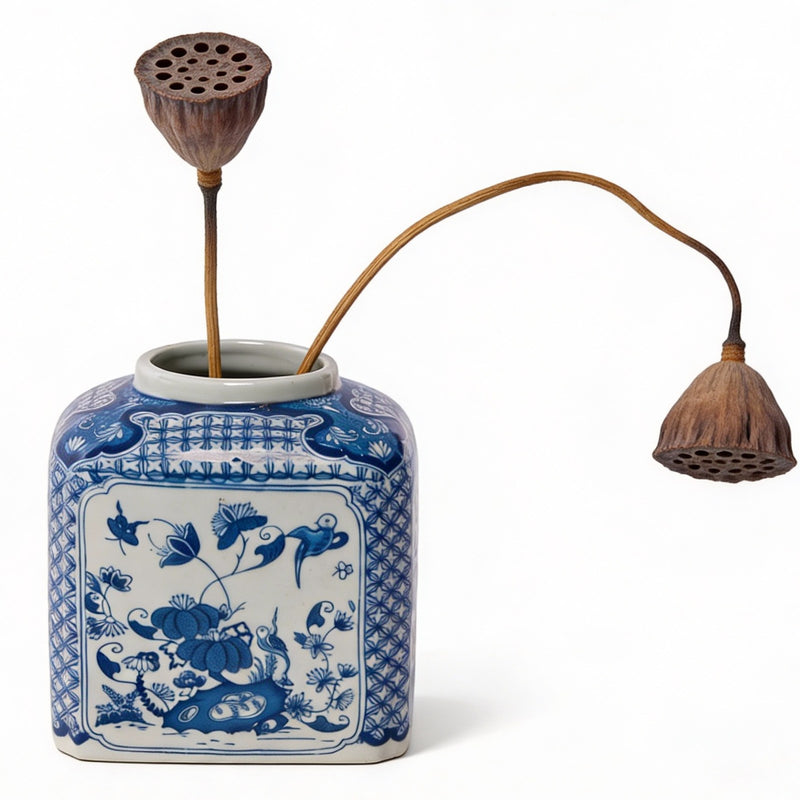
When we source and develop our ceramics, we mandate the same level of artistic integrity found in historical pieces. For example, our Hand-Painted Blue & White Birds & Flowers Porcelain Jar with Lid – Artisan Decorative Accent is not a cheap, transfer-printed replica. It is crafted utilizing traditional techniques where the cobalt is applied by skilled artisans, ensuring that every brushstroke carries warmth, character, and a sense of gift-worthiness.
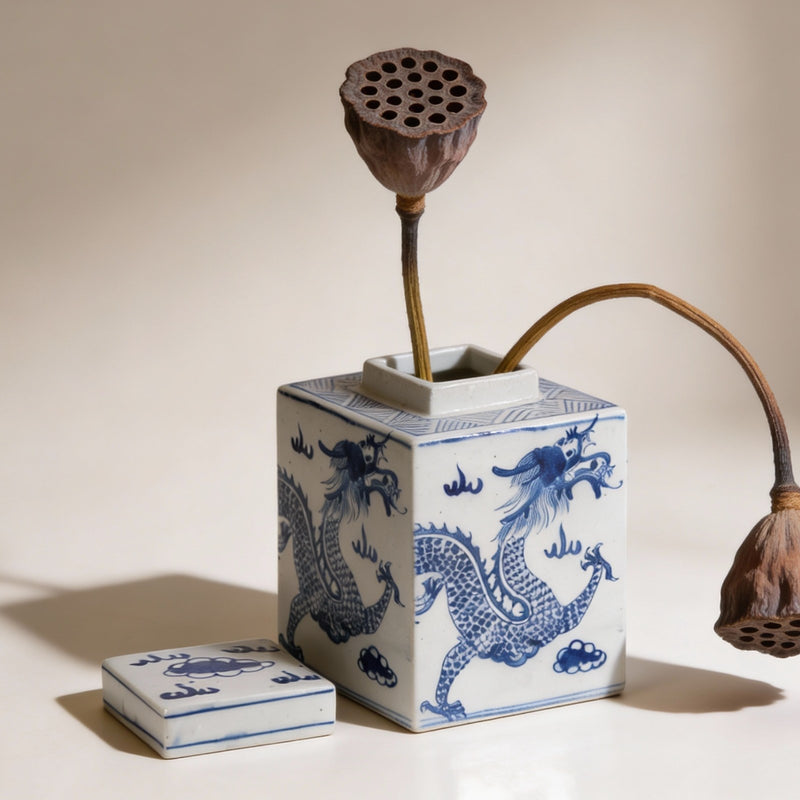
Similarly, our Hand-Painted Blue & White Dragon Jar with Lid – Artisan Chinese Porcelain Decorative Accent honors the legacy of imperial kilns. By working closely with independent designers, we ensure the intricate dragon motifs are painted with the fluid dynamism expected of high-end porcelain. We believe that knowing why blue and white porcelain is valuable helps you appreciate the dedication required to produce these modern heirlooms. Every product tells a story—and adds a little brightness to everyday life.
4. Summary Checklist: Evaluating Your Porcelain
If you are reviewing a piece in your collection and wondering whether your blue and white porcelain is valuable, use our professional evaluation checklist below to guide your assessment.
| Evaluation Category | Signs of Mass-Produced or Low Value | Signs That Blue and White Porcelain is Valuable |
|---|---|---|
| Cobalt Pigment | Flat, uniform color; perfectly even saturation; printed dot matrices visible under a loupe. | Varying depths of blue; visible brushstrokes; "heaping and piling" rust spots in older pieces. |
| Glaze Texture | Overly glossy, perfectly smooth synthetic feel; easily scratched. | Slight "orange peel" texture; deep luster; signs of natural shrinkage or pinholing. |
| Base and Foot Rim | Rough, chalky, or completely glazed over flat bottoms; perfectly machine-cut rims. | Smooth, dense unglazed paste; subtle iron spots; hand-finished trimming marks. |
| Artistry and Motif | Stiff, repetitive patterns with identical, stamped elements; overlapping seams from decals. | Fluid, dynamic hand-painting; slight asymmetries that reveal the artisan's individual touch. |
| Weight and Feel | Lightweight, feels hollow or akin to modern stoneware and slip-cast ceramics. | Dense, heavy for its size, highly resonant when gently tapped, translucent at thin edges. |
5. Frequently Asked Questions (FAQs)
We recommend starting with a jeweler's loupe. Look closely at the blue lines. If you see a matrix of tiny, uniform dots, the piece is transfer-printed and likely a modern mass-produced item. If you see solid, fluid strokes of cobalt that vary in intensity, it is hand-painted, which is the first major indication that the blue and white porcelain is valuable.
Yes, absolutely. While modern pieces do not possess the antique market premium, high-quality artisan ceramics—like the Story & Suns Hand-Painted Blue & White Dragon Jar—are highly valuable for their craftsmanship, interior design impact, and longevity. We recommend investing in pieces that are thoughtfully curated and genuinely hand-painted rather than settling for cheap imitations.
It refers to a specific firing effect common in 14th and 15th-century Ming porcelain. The imported cobalt pigment was rich in iron, which caused it to concentrate and break through the glaze during firing, creating dark, tactile spots. When authentic, this effect is highly sought after and confirms that the antique blue and white porcelain is valuable.
