

In the realm of interior design and fine ceramics, few aesthetics command the enduring, universal appeal of cobalt pigment painted over pristine white porcelain. Whether gracing the mantelpieces of historic European estates, anchoring the centerpieces of modern minimalist dining tables, or serving as treasured heirlooms, these distinctive ceramics are instantly recognizable. At Story & Suns, where every piece tells a story and every gift shines with meaning, we curate collections thoughtfully rather than relying on mass production. From our experience in both the US and European markets, one of the most frequent inquiries we receive from design enthusiasts and collectors alike is regarding proper terminology: precisely what are the blue and white Vases called?

The answer to this question is deeply fascinating and highly dependent on geographical origin, historical era, and manufacturing technique. The terminology for the blue and white Vases called Qinghua in China differs vastly from the terminology for the blue and white Vases called Delftware in the Netherlands. To truly appreciate these artifacts, one must understand the centuries of cross-cultural exchange, maritime trade, and ceramic innovation that shaped their existence. In this comprehensive guide, we will explore the rich history of these ceramics, identify the specific names used across different cultures, and offer expert advice on how to seamlessly integrate these timeless pieces into your contemporary home decor.
Table of Contents
- 1. The Chinese Origins: Qinghua Porcelain
- 2. The European Adaptations and Imitations
- 3. The Interior Design Term: Chinoiserie
- 4. Identifying Quality, Craftsmanship, and Curated Collections
- 5. Expert Styling Tips for Your Home
- 6. Summary Table: What Are the Blue and White Vases Called by Region
- 7. Frequently Asked Questions (FAQs)
- 8. References
1. The Chinese Origins: Qinghua Porcelain
If you are exploring the absolute genesis of this art form, the original blue and white Vases called Qinghua (literally translating to blue flowers) trace their roots back to the Tang dynasty, though they reached their absolute pinnacle of refinement during the Ming and Qing dynasties in China. The geographic epicenter of this ceramic revolution was Jingdezhen, a city in Jiangxi province that possessed abundant local deposits of kaolin clay and petuntse (porcelain stone).
The defining characteristic of Qinghua is the underglaze technique. Artisans painted intricate designs directly onto the unfired, porous ceramic body using a pigment derived from cobalt oxide, which was originally imported from Persia via the Silk Road (often referred to historically as Mohammedan blue). Once the design was applied, the piece was coated in a clear glaze and fired in a kiln at extraordinarily high temperatures, often exceeding 1300 degrees Celsius. This intense heat transformed the dull, dark pigment into the brilliant, permanent sapphire hue that collectors covet today.
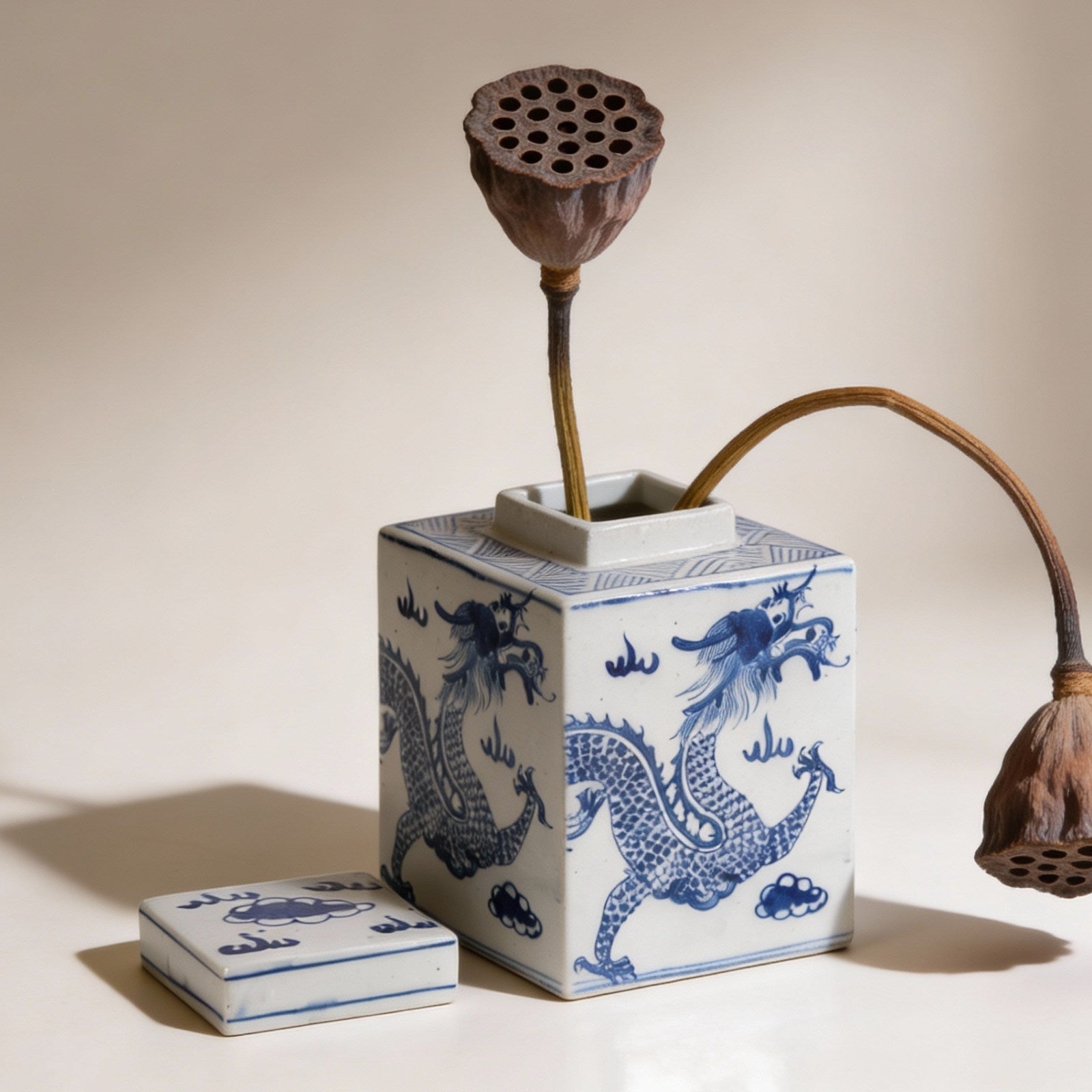
At Story & Suns, we honor this incredible heritage through our carefully curated selections. We recommend authentic, artisan-crafted pieces for those looking to capture this historical essence. For example, our Hand-Painted Blue & White Dragon Jar with Lid – Artisan Chinese Porcelain Decorative Accent is a magnificent homage to the imperial aesthetics of the Ming dynasty, where the dragon motif symbolized power, strength, and good fortune. Because we maintain strict quality control and selective in-house production, we ensure that the cobalt application on our jars reflects the depth and variation indicative of true artisanal hand-painting, rather than flat, machine-printed decals.
2. The European Adaptations and Imitations
As the Dutch East India Company began importing massive quantities of Qinghua porcelain into Europe during the 17th century, the European aristocracy developed a voracious appetite for these exotic goods. However, the exact recipe for hard-paste porcelain remained a closely guarded Chinese state secret for centuries. Unable to replicate the true porcelain formula, European potters began creating imitations, which led to new, distinct categories of the blue and white Vases called by entirely different regional names.
2.1 The Dutch Mastery: Delftware
In the Netherlands, potters in the city of Delft developed a highly successful alternative. The Dutch blue and white Vases called Delftware (or Delft Blue) are technically not porcelain at all, but rather tin-glazed earthenware. Because their local clay fired to a dull reddish-brown, the Dutch artisans coated the vessels in an opaque white tin glaze to mimic the stark white background of Chinese porcelain. They then painted the surface with cobalt and fired it a second time.
Early Delftware meticulously copied Chinese motifs, including pagodas, willow trees, and mythical beasts. Over time, however, the artisans began incorporating distinctly Dutch scenery, such as windmills, tulips, and maritime landscapes. Today, when antique collectors refer to the blue and white Vases called Delftware, they are specifically referring to these softer, earthenware pieces originating from the Netherlands.
2.2 The British Industrialization: English Transferware
By the late 18th century, British potters in Staffordshire revolutionized the industry through mass production. The British blue and white Vases called Transferware utilized a completely different decorative technique. Instead of hand-painting each individual vase, an engraved copper plate was inked with cobalt pigment and pressed onto a thin tissue paper. This paper was then applied to the ceramic body, transferring the intricate design before firing.
This technique allowed for highly detailed, uniform, and inexpensive ceramics. The most famous pattern to emerge from this era is the Willow Pattern, a romanticized, faux-Chinese landscape featuring a weeping willow tree, a bridge, and two flying birds. While authentic Chinese Qinghua is revered for the unique brushstrokes of the individual artisan, English transferware is celebrated for its historic role in democratizing beautifully patterned ceramics for the emerging middle class.
3. The Interior Design Term: Chinoiserie
When you step away from the realms of archaeology and antique dealing and enter the world of contemporary home decor, the terminology shifts once again. In modern styling, the overarching aesthetic of these blue and white Vases called Chinoiserie is the most common industry term. Chinoiserie (derived from the French word for Chinese) is an overarching European artistic style that reflects a highly stylized, westernized interpretation of Asian art, architecture, and design.
From our experience working closely with independent designers across the US and European markets, Chinoiserie ceramics are considered the ultimate design chameleon. They possess the rare ability to look perfectly at home in a heavily layered, traditional maximalist living room, yet they can also serve as a striking, high-contrast focal point in a sleek, modern minimalist space.
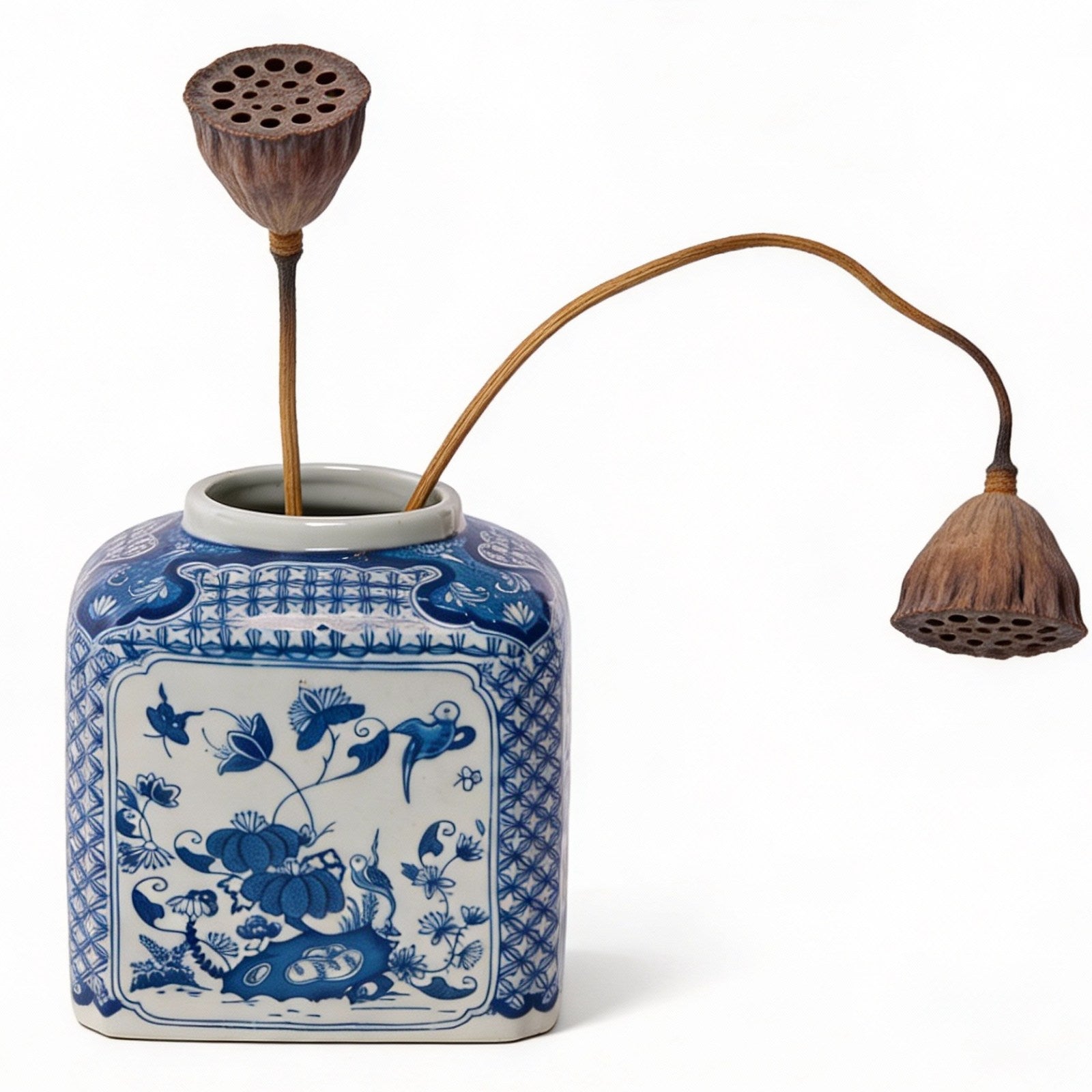
If you are looking to introduce this versatile aesthetic into your home, we recommend selecting pieces that feature classic botanical or avian motifs. Our Hand-Painted Blue & White Birds & Flowers Porcelain Jar with Lid – Artisan Decorative Accent embodies the quintessential Chinoiserie charm. The delicate interplay of the flora and fauna motifs creates a sense of movement and natural beauty that softens rigid architectural lines in modern homes. Because it carries warmth, character, and a sense of gift-worthiness, it operates not just as a vessel, but as a standalone piece of narrative art.
4. Identifying Quality, Craftsmanship, and Curated Collections
When searching the market for the blue and white Vases called by any of these names, understanding how to identify true quality is paramount. At Story & Suns, our professional sourcing expertise dictates that we look beyond the surface aesthetic to evaluate the fundamental craftsmanship of the piece.
True hand-painted porcelain will exhibit subtle variations in the intensity of the blue pigment, known in the industry as heaping and piling. Where the artisan's brush naturally paused or overlapped, the cobalt oxide will appear darker, sometimes even breaking the glaze slightly to create a textured, deep navy or blackish-blue spot. This variation is a hallmark of authenticity and human touch. Conversely, mass-produced transferware will display a completely uniform color depth, and upon very close inspection, you may even notice tiny pixelation or seam lines where the transfer paper was applied.
Furthermore, we recognize that the legacy of Jingdezhen ceramic mastery has evolved far beyond traditional cobalt underglaze. While we deeply revere historical Qinghua, we also curate pieces that represent the cutting edge of ceramic art. For those who appreciate the heritage of Jingdezhen but seek a more contemporary, abstract aesthetic, we offer the Handmade Jingdezhen Crystalline Flat-Belly Wide-Mouth Vase – Unique Ceramic Art, Luxury Gift & Home. The crystalline glaze technique requires an incredibly precise firing schedule, allowing actual zinc silicate crystals to grow organically within the glaze matrix as the kiln cools. It represents the same dedication to material mastery that birthest the original blue and white masterpieces centuries ago.
5. Expert Styling Tips for Your Home
Once you have acquired your curated pieces, displaying them correctly elevates their visual impact. From our experience, we recommend the following styling strategies:
- Massing and Grouping: The visual power of cobalt and white is magnified when pieces are grouped together. Create a vignette on a console table or mantle by grouping vases and jars of varying heights and shapes. The cohesive color palette unifies the collection, even if the specific patterns differ entirely.
- High-Contrast Pairings: Blue and white ceramics pop spectacularly against warm, rich colors. We recommend placing your vases against walls painted in deep terracotta, mustard yellow, or emerald green. The contrast highlights the pristine white background of the porcelain.
- Functional Decor: Do not relegate these pieces strictly to display cabinets. A wide-mouth jar with the lid removed serves as an exquisite vessel for fresh hydrangeas or cherry blossoms. Incorporating them into daily life ensures every object feels personal in your home.
6. Summary Table: What Are the Blue and White Vases Called by Region
To assist collectors and design enthusiasts in navigating the terminology, we have compiled a definitive summary table detailing the various names associated with these iconic ceramics.
| Terminology / Name | Geographic Origin | Base Material | Defining Characteristics |
|---|---|---|---|
| Qinghua (Blue and White) | Jingdezhen, China | Hard-Paste Porcelain | Hand-painted cobalt underglaze, fired at extreme temperatures, highly durable, translucent. |
| Delftware (Delft Blue) | Delft, Netherlands | Tin-Glazed Earthenware | Opaque white glaze covering reddish clay, incorporates Dutch landscapes alongside Asian motifs. |
| English Transferware | Staffordshire, England | Ironstone / Bone China | Designs transferred via engraved copper plates and tissue paper; highly uniform, mass-produced. |
| Chinoiserie | Europe (Stylistic Term) | Various | An interior design term describing the European, highly stylized interpretation of Asian art and motifs. |
| Talavera (Poblana) | Puebla, Mexico | Majolica Earthenware | Heavily influenced by imported Chinese ceramics via the Manila Galleons; features thick, raised glazes. |
