

Collectors, interior designers, and home decor enthusiasts frequently encounter a common dilemma when curating their spaces: identifying the true material composition of their decorative vessels. While the terms are often used interchangeably in casual conversation, ceramic and porcelain are structurally and chemically distinct materials. Understanding the differences is critical not only for assessing value but also for proper maintenance and placement within your home.

At Story&Suns, we craft most of our products in our own factory or with partners of nearly 30 years. Many are handmade or semi-handcrafted, offering artisanal quality at exceptional value. Because we oversee the sourcing of raw clays, the formulation of glazes, and the precise firing temperatures required for both materials, we possess an intimate, technical understanding of kiln-fired arts. From our experience on the factory floor, the distinction between a porous earthenware piece and a fully vitrified porcelain masterpiece lies in the microscopic details.
If you have ever found yourself holding a beautiful piece of pottery and wondering about its origin and makeup, you are not alone. In this comprehensive guide, we will outline the exact methodologies industry professionals use. By following our 6 tips to tell if a vase is ceramic or porcelain, you will gain the expertise to evaluate any piece of pottery with absolute confidence.
Table of Contents
- Summary Table: Ceramic vs. Porcelain Characteristics
- Tip 1: Perform the Translucency Light Test
- Tip 2: Conduct the Acoustic Resonance Test
- Tip 3: Examine the Unglazed Foot Rim
- Tip 4: Assess Density and Weight Ratios
- Tip 5: Analyze the Glaze Integration and Surface Texture
- Tip 6: Evaluate the Structural Firing Complexity
- About Story&Suns Collections
- Frequently Asked Questions (FAQs)
- Industry References
Summary Table: Ceramic vs. Porcelain Characteristics
To establish a foundational understanding before we explore the detailed tips to tell if a vase is ceramic or porcelain, we have compiled a technical comparison matrix. This table highlights the primary physical and chemical differences resulting from their distinct manufacturing processes.
| Characteristic | Traditional Ceramic (Earthenware/Stoneware) | True Porcelain |
|---|---|---|
| Primary Clay Component | Ball clay, stoneware clay, earthenware clay | Kaolin clay mixed with petuntse (china stone) |
| Firing Temperature | 1,000 to 1,200 degrees Celsius | 1,250 to 1,400+ degrees Celsius |
| Vitrification Level | Semi-porous to non-porous (depending on glaze) | Fully vitrified (glass-like and completely impermeable) |
| Light Transmission | Opaque; blocks light completely | Translucent; allows light to pass through |
| Acoustic Profile | Dull, flat, or low-pitched thud | Clear, high-pitched, bell-like ring |
Tip 1: Perform the Translucency Light Test
The single most definitive method to tell if a vase is ceramic or porcelain is the translucency test. Porcelain is formulated using a high percentage of kaolin clay and petuntse. When these materials are fired at extreme temperatures exceeding 1,300 degrees Celsius, they undergo a chemical process called vitrification. The clay body literally transforms into a dense, glass-like substance.
To perform this test, we recommend taking the vase into a dark room and placing a strong, direct light source—such as an LED flashlight—inside the vessel, pressing it against the interior wall. Look at the exterior wall directly opposite the light. If the piece is true porcelain, you will see a visible, soft glow of light passing through the body of the vase. The thinner the porcelain, the brighter the light transmission will be. Conversely, standard ceramics, earthenware, and stoneware are entirely opaque. Regardless of how thin the potter threw the ceramic walls, the light will be completely blocked. From our experience, this is the most reliable, non-destructive diagnostic tool available to collectors.
Tip 2: Conduct the Acoustic Resonance Test
Because porcelain is fully vitrified and possesses a glass-like molecular structure, it interacts with acoustic vibrations much differently than lower-fired ceramics. We highly recommend conducting a sound test, particularly when examining thick-walled vases where the light test may be difficult to interpret.
Hold the vase securely but lightly by its neck or base, ensuring you are not dampening the main body with your hands. Using a metal coin, a wooden dowel, or simply flicking your fingernail, gently tap the widest part of the vase. Listen carefully to the resulting sound. If the acoustic feedback is a high-pitched, clear, and sustained ring—similar to tapping a crystal wine glass—you are handling porcelain. If the sound is a dull, flat thud with zero sustained resonance, the vase is traditional ceramic. The porous nature of ceramic clay absorbs acoustic energy, whereas the dense, fused particles of porcelain reflect it, creating that signature bell-like chime.
Tip 3: Examine the Unglazed Foot Rim
During the kiln firing process, the bottom rim of a vase (the foot) cannot be glazed, as the melting glass would fuse the piece to the kiln shelf. This exposed, unglazed ring provides a crucial window into the raw material of the vessel. Examining the foot is an essential step to tell if a vase is ceramic or porcelain.
Turn the vase upside down and run your finger along the unglazed foot. A porcelain foot rim will feel incredibly smooth, almost like polished stone, and will typically be stark, pure white. The grain structure is so tight that it is nearly imperceptible to the naked eye. In contrast, a ceramic or stoneware foot rim will feel coarser, chalkier, or gritty. Furthermore, the color of a ceramic foot rim will often reveal the natural earth tones of the clay body—ranging from terracotta red to sandy beige or dark grey. If you see a coarse, colored foot rim underneath a glossy glaze, you are definitively looking at a ceramic piece.
Tip 4: Assess Density and Weight Ratios
While weight can sometimes be deceptive due to variations in wall thickness, density is a reliable indicator for experienced handlers. Because porcelain is fired until all pores are eliminated and the material is completely fused, it is significantly denser than standard ceramic.
If you hold a porcelain vase, it will often feel surprisingly heavy for its delicate appearance. The material is tightly packed at a molecular level. Standard ceramic vases, particularly earthenware, are less dense and retain microscopic air pockets within the clay structure. Therefore, a bulky ceramic vase might feel lighter than expected relative to its overall size. From our experience, once you handle enough pottery, your tactile memory will allow you to quickly gauge the density ratio and tell if a vase is ceramic or porcelain the moment you lift it from a table.
Tip 5: Analyze the Glaze Integration and Surface Texture
The interaction between the glaze and the clay body provides excellent clues regarding the firing process. On standard ceramics, the glaze is applied to the bisque-fired clay and then melted over the top. It often sits on the surface like a distinct layer. On high-fired porcelain, the extreme temperatures cause the glaze to fuse intimately with the clay body itself, creating a surface where it is difficult to distinguish where the clay ends and the glaze begins.
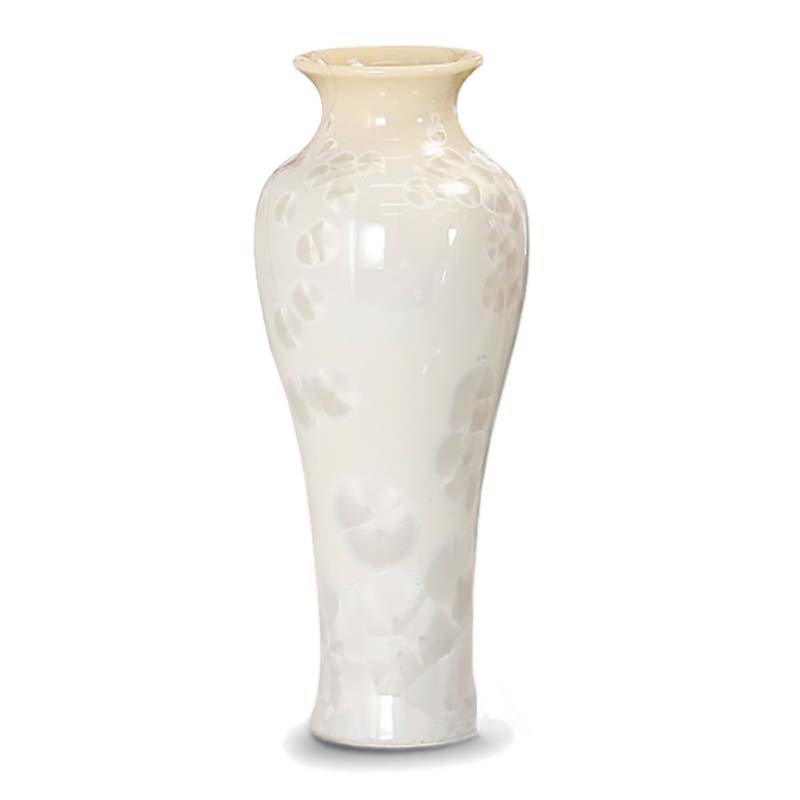
However, modern ceramic engineering allows us to achieve breathtaking, glass-like finishes on high-quality ceramic bodies without the need for full porcelain vitrification. For example, consider our Story&Suns Crystalline Glaze Ceramic Fishtail Flower Vase – Functional & Decorative, Handmade with Mother-of-Pearl Finish | Display Solo or in Sets. By utilizing advanced firing schedules and specialized crystalline glazes, we encourage zinc silicate crystals to grow on the ceramic surface during the cooling phase. This creates an optical illusion of depth and a mother-of-pearl luminosity that rivals the finest porcelain. When evaluating a vase, look closely at how the glaze breaks over the edges and rims. A thick, pooled glaze that clearly sits atop a darker clay body indicates a ceramic piece, while a seamless integration suggests porcelain.
Tip 6: Evaluate the Structural Firing Complexity
The physical capabilities of the clay during the firing process differ vastly. Porcelain has a notoriously narrow firing margin; it approaches the melting point of glass in the kiln, making it highly susceptible to warping, slumping, and collapsing. Because of this, large, complex, or heavily manipulated shapes are exceedingly difficult to execute in true porcelain without severe defect rates.
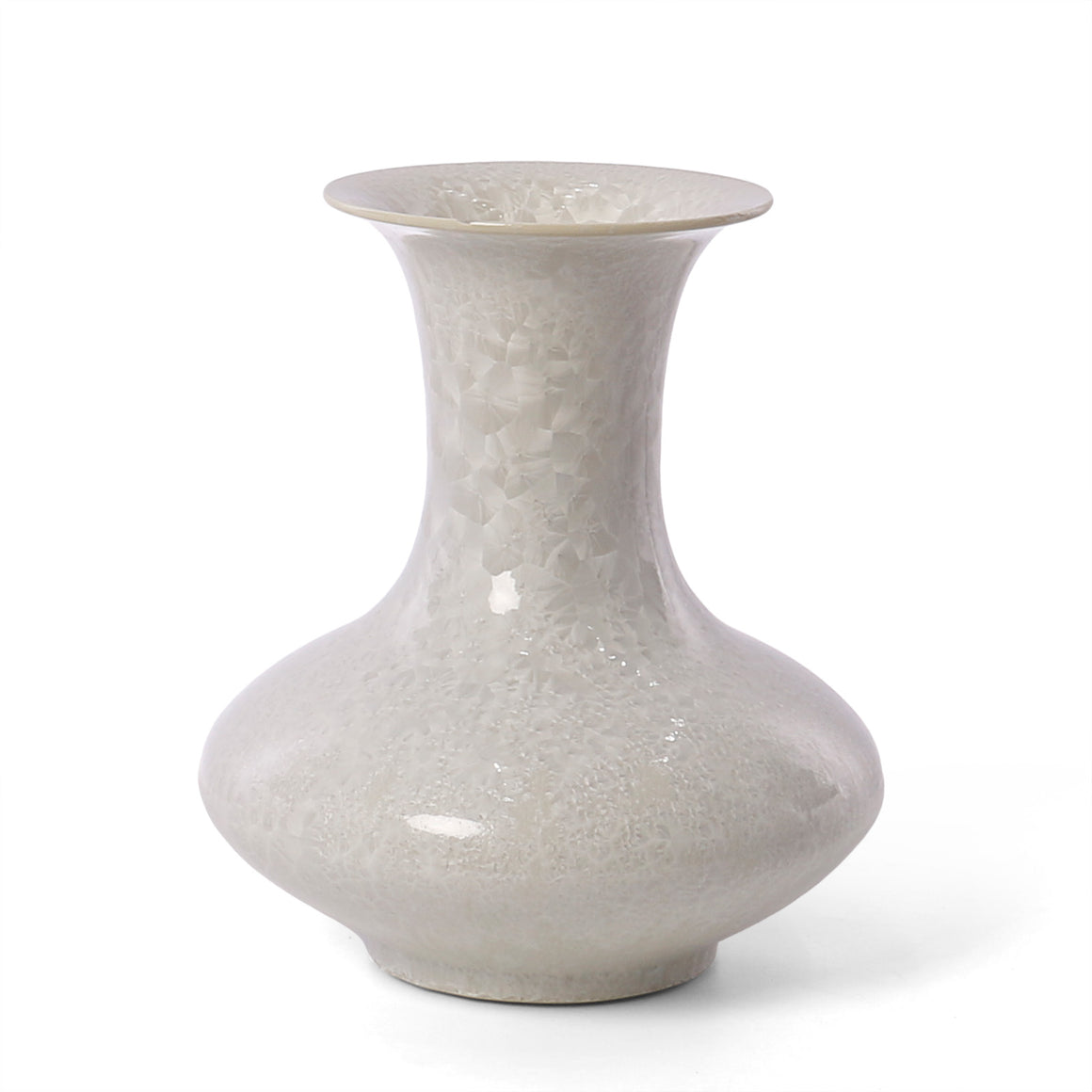
If you encounter a massive, highly sculptural, or thick-walled floor vase, it is statistically more likely to be a durable stoneware or ceramic, as these clays possess superior structural stability at high temperatures. Conversely, if you are looking at an impossibly thin, delicate, and perfectly symmetrical vessel, it is likely porcelain. We proudly showcase the pinnacle of this craft with our Handmade Jingdezhen Crystalline Flat-Belly Wide-Mouth Vase – Unique Ceramic Art, Luxury Gift & Home Display. Jingdezhen is historically known as the porcelain capital of the world. Partnering with artisans who utilize techniques passed down through generations allows us to offer pieces that demonstrate the flawless structural integrity and extreme firing complexity inherent to authentic porcelain and high-end ceramics.
About Story&Suns Collections
Identifying the materials in your home is part of cultivating a deeply personal and curated living space. At Story&Suns, we believe that understanding the origin, craftsmanship, and material science behind your decor enhances your appreciation of it. We craft most of our products in our own factory or with partners of nearly 30 years, ensuring that whether you are purchasing a robust ceramic centerpiece or a delicate porcelain accent, the quality is uncompromising. Many of our pieces are handmade or semi-handcrafted, offering artisanal quality at exceptional value.
We invite you to explore our Gifts & Lifestyle collections to discover more exquisite vases, home accents, and uniquely glazed pottery. Additionally, shop our Bags & Fashion for timeless style that mirrors the elegance and craftsmanship found in our home decor lines.
Frequently Asked Questions (FAQs)
```Is porcelain just a specific type of ceramic?
Yes. Technically, all porcelain is a sub-category of ceramics. The term "ceramic" applies to any object made from clay and hardened by heat. However, in industry terminology, we use "ceramic" to refer to lower-fired, non-vitrified clays (like earthenware and stoneware), while "porcelain" refers specifically to the high-fired, translucent, kaolin-based material.
Can I use the scratch test to tell if a vase is ceramic or porcelain?
While it is true that porcelain is significantly harder and more scratch-resistant than standard earthenware, we do not recommend using a scratch test. Attempting to scratch the unglazed foot rim with a steel blade can permanently damage the piece, reducing its value. The light and sound tests are completely non-destructive and far more reliable.
Why is porcelain generally more expensive than standard ceramics?
Porcelain requires highly refined raw materials, specifically pure kaolin and petuntse. Furthermore, the extreme firing temperatures require more fuel and specialized kiln infrastructure. The high loss rate during firing—due to porcelain's tendency to warp as it reaches a glass-like state—also drives up the final manufacturing cost.
Are ceramic vases watertight?
True porcelain is inherently watertight because it is fully vitrified (non-porous). Traditional ceramics (earthenware/stoneware) are porous by nature and rely entirely on the integrity of their interior glaze to hold water. If a ceramic vase lacks an interior glaze or if the glaze has developed microscopic cracks (crazing), it may sweat or leak water onto your furniture. We recommend testing vintage ceramic vases on a waterproof surface before displaying fresh flowers.
Industry References
1. American Ceramic Society (ACerS). "Vitrification and Microstructural Evolution in Porcelain and Stoneware Clays." Ceramic Material Science Journal, 2024.
2. International Society of Potters and Kiln Artisans. "Acoustic Resonance as a Non-Destructive Diagnostic Tool in Pottery Authentication." 2023.
